NASA’s 22-Year-Old Swift Space Telescope Burns Up During Fiery Re-entry Over Indonesia
News Mania Desk/ Piyal Chatterjee/ 5th November 2026

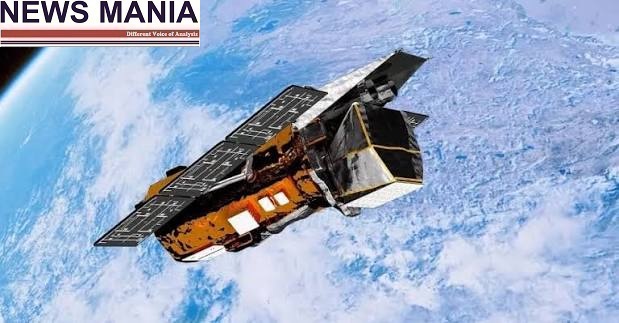
NASA’s Neil Gehrels Swift Observatory, which spent more than 22 years studying some of the universe’s most powerful cosmic explosions, has re-entered Earth’s atmosphere, bringing its long-running scientific mission to an end. The spacecraft burned up over Indonesia’s North Sumatra province on Wednesday, November 4, marking the conclusion of one of NASA’s significant astrophysics missions.
According to the US Space Force, the satellite re-entered the atmosphere at approximately 7:39 am EST. Weighing around 1,452 kilograms, the spacecraft was travelling at nearly 22 times the speed of sound when it encountered the atmosphere. NASA had expected most of the satellite to disintegrate due to intense friction and heat during re-entry, although some fragments could potentially survive. No injuries or damage on the ground were reported.
Launched in 2004, the Swift space telescope was initially designed to operate for just two years. However, its performance and scientific contributions allowed it to remain active for more than two decades. Its primary objective was to detect and study gamma-ray bursts, extremely powerful explosions that release enormous amounts of energy across the universe.
Over the years, Swift expanded its observations to include supernovae, black holes, stellar X-ray flares, asteroids and comets. Its discoveries and observations contributed to approximately 7,000 scientific research papers, making it an important resource for astronomers worldwide. NASA had explored possibilities of extending the observatory’s operational life through a rescue spacecraft known as LINK. However, the attempt failed after the vehicle developed an uncontrollable spin following its launch in July 2026.
Its eventual atmospheric re-entry marked the final chapter of a mission that significantly advanced scientists’ understanding of high-energy astronomical phenomena. Despite its retirement, the observatory’s extensive scientific data will continue to support astronomical research for years to come.