BepiColombo enters Mercury orbit despite software glitch, ESA confirms spacecraft remains on track
News Mania Desk/ Piyal Chatterjee/ 25th November 2026

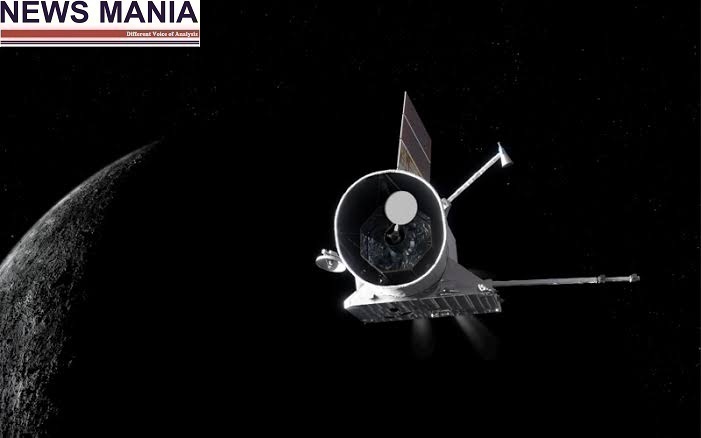
The BepiColombo spacecraft successfully entered orbit around Mercury on November 21 despite a software malfunction that interrupted its planned thruster manoeuvre, the European Space Agency (ESA) confirmed. The spacecraft achieved orbital capture after an eight-year journey, although the technical issue prevented it from completing the entire manoeuvre as scheduled.
The orbit-insertion burn was initially planned to last approximately 37 minutes using four chemical thrusters. However, a software-related problem affecting the spacecraft’s orientation and thruster control triggered a safe-mode response, forcing the manoeuvre to stop prematurely. Despite the interruption, BepiColombo completed around 77% of the planned velocity change, which was sufficient to establish an orbit around the planet.
As a result, the spacecraft entered a 75-hour orbit around Mercury rather than the originally intended 58-hour trajectory. Mission controllers have since assessed the spacecraft’s condition and confirmed that it remains stable, with adjustments made to the mission’s operational plans to account for the deviation.
The ESA said the spacecraft remains on course for its next major milestone, with the separation of the European Mercury Planetary Orbiter (MPO) and Japan’s Mercury Magnetospheric Orbiter (Mio) scheduled for December 9. The two spacecraft will eventually operate independently to study different aspects of Mercury and its surrounding environment. BepiColombo is a joint mission between the European Space Agency and the Japan Aerospace Exploration Agency (JAXA). Launched in 2018, it was designed to investigate Mercury’s geology, interior structure, magnetic field and interaction with the solar wind.
The spacecraft’s arrival marks a significant milestone for the mission, which has navigated several planetary flybys and complex manoeuvres during its journey. Scientists expect the mission’s main scientific observations to begin in April 2027. Despite the software setback, ESA said the spacecraft’s successful orbital capture has kept the mission on track, allowing preparations for the next phase of scientific operations to continue.