Astronomers discover youngest known Jupiter-sized planet, Elias 2-24 b
News Mania Desk/ Piyal Chatterjee/ 28th November 2026

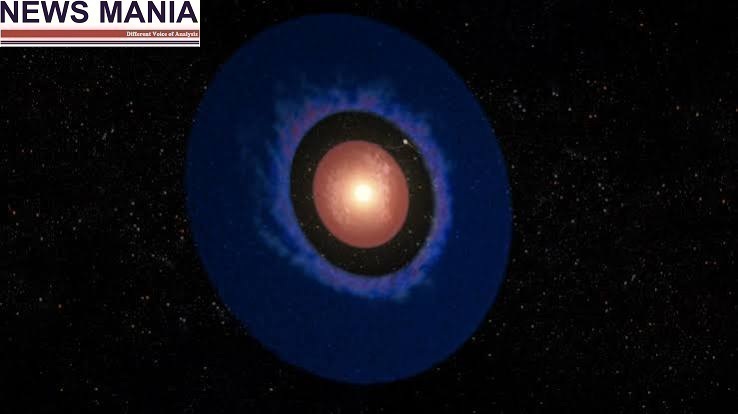
Astronomers have identified Elias 2-24 b, a Jupiter-sized planet estimated to be less than one million years old, making it one of the youngest confirmed planets discovered so far. The discovery offers scientists a rare opportunity to study planetary formation during its earliest stages and investigate how giant planets develop around young stars.
Located approximately 450 light-years from Earth, Elias 2-24 b is orbiting a young star surrounded by a protoplanetary disc of gas and dust. The planet remains embedded within this material, which is believed to provide the building blocks for the formation of planets, moons and other celestial objects. Researchers detected the planet using observations from the W. M. Keck Observatory in Hawaii, analysing telescope data with the help of a coronagraph. The instrument blocks the intense light emitted by a star, allowing astronomers to observe faint objects orbiting it. This technique made it possible to identify the planet despite the brightness of its host star.
Elias 2-24 b was observed within a gap in the surrounding protoplanetary disc. Astronomers believe such gaps can form when young planets accumulate gas and dust as they grow, gradually clearing material along their orbital paths. The discovery provides evidence that planet formation processes may already be underway within extremely young stellar systems.
The planet’s remarkably young age makes it particularly valuable for scientific research. Most previously identified exoplanets are significantly older, limiting opportunities to observe how planetary systems evolve during their formative years. Studying Elias 2-24 b could help researchers understand how giant planets acquire their mass and interact with the discs surrounding their host stars. The finding could also challenge existing theories about the timescales involved in the formation of massive planets. Scientists hope further observations will reveal more about the planet’s atmosphere, composition and growth process.