According to the Supreme Court, only Buddhists, Sikhs, and Hindus are eligible for Scheduled Caste classification.
News Mania Desk/ Piyal Chatterjee/24th March 2026

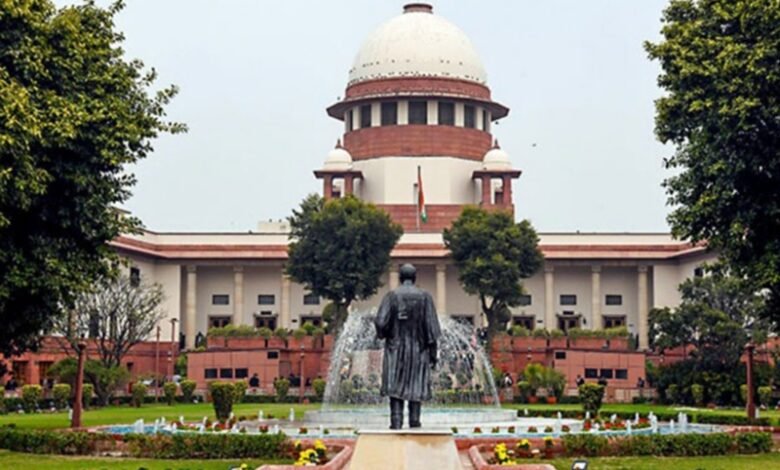
On Tuesday, the Supreme Court ruled that a person cannot get Scheduled Caste (SC) status and seek protection under the Scheduled Castes and Scheduled Tribes (Prevention of Atrocities) Act if they convert to a faith other than Buddhism, Sikhism, or Hinduism. The court also decided that the only people who can claim SC status are those who practice Buddhism, Sikhism, or Hinduism.
The Andhra Pradesh High Court’s decision that a person who converts to Christianity and actively practices the religion cannot be recognized as a member of the SC community was affirmed by a bench of Justices PK Mishra and NV Anjaria. The decision was made in response to an appeal filed by a pastor named Chinthada Anand, who contested an Andhra Pradesh High Court order from May 2025, claiming that he was subjected to abuse and discrimination based on caste.
Delivering its judgment, the Supreme Court said, “No person who professes a religion other than Hindu, Sikh or Buddhist shall be a member of the Scheduled Caste. Conversion to any other religion results in loss of Scheduled Caste status.”
Anand petitioned the Andhra Pradesh High Court to have the accusations against him dropped when the investigation was over. According to sources, Justice N. Harinath dismissed the FIR, ruling that the complainant could not seek protection under the SC/ST Act because he had lost his SC status after converting to Christianity. Additionally, the High Court noted that having a SC certificate would not help his case because conversion, in which caste distinctions are not recognized, nullifies SC status.
Anand subsequently went to the Supreme Court, which upheld the Andhra Pradesh High Court’s ruling.
“In the present case, it is not the case of the petitioner that he re-converted from Christianity to his original religion or has been accepted back in the folds of the Madika community. It establishes that the appellant continued to profess Christianity and has been functioning as a pastor for more than a decade, conducting regular Sunday prayers at the houses of the village,” the bench said.
“It is also admitted that at the time of the alleged incident, he was conducting prayer meetings at the house. These concurrent facts leave no room for doubt that he remained a Christian on the date of the occurrence,” it added.
The Supreme Court’s judgment reinforces the legal position that such status is contingent on religious identity, making conversion a decisive factor in determining eligibility for constitutional safeguards.