Amid the NALSAR dispute, Justice Nagarathna urges the Bar to reflect.
News Mania Desks/ Piyal Chatterjee/ 28th August 2026

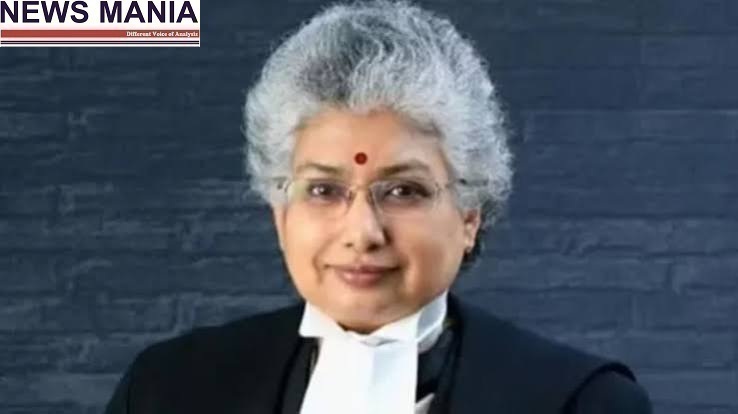
Following the recent dispute involving the Bar Council of India (BCI) and NALSAR University of Law, Hyderabad, Supreme Court judge Justice BV Nagarathna stated on Saturday that Bar Councils should reflect on their position and strive to gain the respect of their members.
“The Bar Councils, whether the Central or the States, must introspect on their role and importance in upholding professional ethics, morality and professional competence,” Justice Nagarathna said while delivering the convocation address at the 13th convocation of National Law University, Delhi.
“When a Bar Council does not earn the respect of its members, it is not a good sign for the legal profession,” she said. Her comments take on relevance in light of the BCI’s recent move against the NALSAR graduating class of 2026, which led to a dispute with the students and attracted harsh criticism from the Supreme Court.
In the midst of a dispute over a student campaign challenging Chief Justice of India Surya Kant’s invitation to attend the university’s convocation, the BCI had on 13 August instructed state Bar Councils not to register NALSAR’s 2026 graduates as advocates. After that, the BCI lifted the enrolment ban and ended the batch’s legal actions. Manan Kumar Mishra, the chairman of BCI, subsequently expressed regret to the students.
In the course of hearing the case, a Supreme Court bench presided over by Chief Justice Kant questioned the BCI’s involvement in the dispute and underlined the students’ freedom to peacefully express criticism. Parts of the legal community also criticised the BCI as a result of the incident, calling for Mishra’s resignation.
Justice Nagarathna positioned the issue of the Bar Council’s credibility within the broader framework of the obligations of the legal profession without mentioning the NALSAR incident. She stated that the Bar should “re-think” how beneficial it is to litigants, how it protects democracy, and how it upholds the dignity of courts and the rule of law.
“The Bar in India must re-think about its usefulness to the litigant public, its role in safeguarding our democracy and in upholding the majesty of courts of law and its indispensability in upholding justice and rule of law,” she said.
Justice Nagarathna said the legal system was currently “bogged down” by pendency, delays, rising costs and uncertainty and called upon the Bar to speak in a “singular voice” on how the justice delivery system could be sustained.
She linked the present responsibility of lawyers to the historical role played by the legal profession in India’s freedom struggle and constitution-making, saying the time had come for individual members of the Bar as well as the profession collectively to introspect on their duties towards distressed litigants and democracy.
“The lawyers of this country are the torch bearers of the values of our Constitution,” she said, warning that any lapse or error by the Bar could have a “deep impact” on India’s political and civic life.
Additionally, Justice Nagarathna emphasised that the legal profession was a “office of trust” rather than just a trade or employment. She claimed that because solicitors work in institutions that are owned by the general people, their obligations are not limited by the conditions of an engagement or a client’s instructions.
She urged attorneys to protect the Bar’s independence, arguing that it was necessary for a constitutional democracy to have professionals who could advise, argue, challenge, and represent without needing permission from the government, the market, or even their clients. “Lawyers are safety valves of democracies,” she said, asking the graduating students to “guard” the profession’s independence and “earn its trust”.