Houthi Attack on Riyadh Airport, Trump’s Russian Diesel Deal and Pakistan Emergency Dominate Global Headlines
News Mania Desk/ Piyal Chatterjee/ 12th October 2026

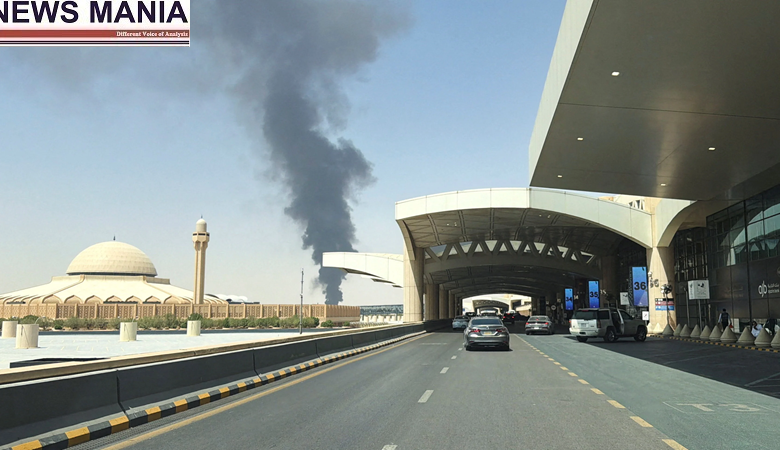
A second Houthi attack on Riyadh airport in two days has reportedly left one person dead and eleven injured, according to officials. A projectile struck King Khalid International Airport on Sunday, starting a fire in a passenger hall, according to a Saudi military official. One Pakistani resident was killed, according to a statement released by Saudi Arabia’s civil aviation authority.
The attack occurred one day after a strike on the same airport reportedly left 308 people injured and 13 dead. The Houthis in Yemen claimed responsibility for several attacks and warned travellers and airlines against using airports or airspace in Saudi Arabia. Their military spokesperson, Brigadier General Yahya Saree, also claimed attacks on Dammam airport and oil facilities in eastern Saudi Arabia. He threatened further operations inside Saudi territory, while Saudi officials said air defences had intercepted a missile near Riyadh airport.
The Houthis have cited Saudi Arabia’s involvement in Yemen’s civil conflict and an alleged airstrike on Sanaa airport as reasons for targeting the kingdom. US President Donald Trump said Washington would decide quickly whether to attack the Houthis, while UK officials indicated possible further support for Saudi Arabia. The escalation has raised concerns about regional security and the future of the fragile peace process in Yemen.
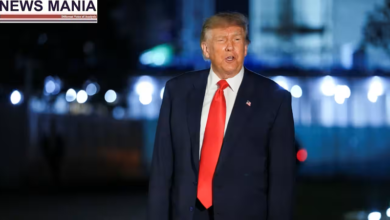
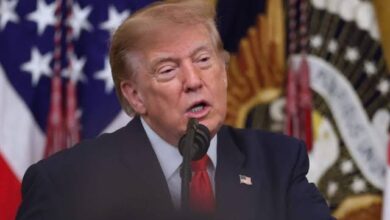
Meanwhile, Trump’s reported plans to purchase diesel from Russia have drawn criticism from lawmakers in both major US political parties. Trump said Russian President Vladimir Putin had agreed to supply an initial 300,000 tonnes of diesel, followed by additional shipments. Russian Deputy Prime Minister Alexander Novak confirmed the proposed export figures to the state-run Tass news agency.
The proposed arrangement has prompted objections from seven US senators, including Republicans Susan Collins, Lisa Murkowski, Thom Tillis and John Curtis, alongside Democrats Ron Wyden, Richard Blumenthal and Jeanne Shaheen. They argued that purchasing Russian energy would provide financial support to Moscow while its war against Ukraine continues.
Ukrainian President Volodymyr Zelensky also criticised the deal, describing it as an investment in a war that should end. The controversy comes as the US-Israel war with Iran continues to disrupt global energy supplies and push up fuel prices. US Treasury Secretary Scott Bessent defended the administration’s approach, arguing that existing legal procedures could help lower prices.
In Pakistan, President Asif Ali Zardari approved a federal recommendation to impose a state of emergency in Khyber Pakhtunkhwa, a province governed by former prime minister Imran Khan’s Pakistan Tehreek-e-Insaf (PTI) party. The move followed accusations by Prime Minister Shehbaz Sharif’s government that the provincial administration had failed to control Islamist militancy.
The emergency has intensified political tensions between the federal government and PTI, which has organised protests demanding Khan’s release and access to medical treatment. The party has also threatened demonstrations in Islamabad.
PTI spokesperson Zulfikar Bukhari condemned the decision, warning that it could lead to further instability and violence. Party chairman Barrister Gohar Khan argued that the move undermined the constitutional mandate of the province’s elected government and weakened provincial autonomy.
Opposition parties and a lawyers’ organisation also criticised the decision, describing it as a serious political mistake. The federal government, however, maintained that the emergency was necessary because security funding had failed to produce sufficient improvements.
The three developments highlight mounting international tensions involving Saudi Arabia and the Houthis, disputes over Russian energy imports, and growing political instability in Pakistan. Their implications extend beyond domestic politics, raising wider concerns about regional security, global energy markets and diplomatic relations.