
Tea Industry Welcomes Minimum Sustainable Price Recommendation to Protect Growers and Ensure Sector’s Future
News Mania Desk/ BUDDHADEB MISRA/ 7th November 2026

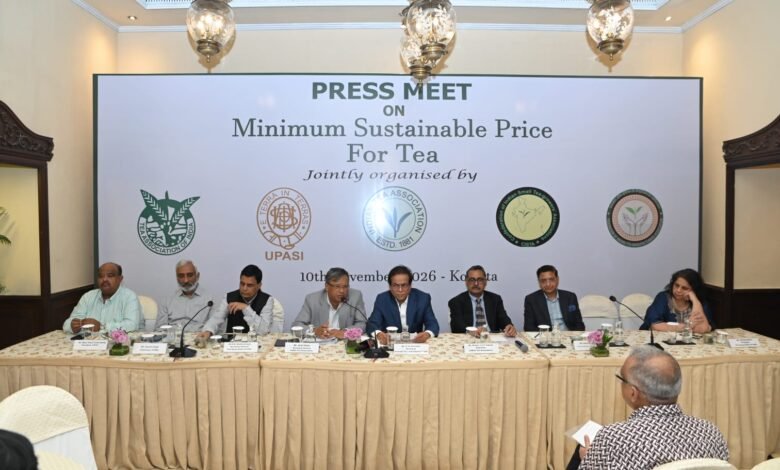
Kolkata, November 10, 2026: India’s tea industry has welcomed a significant recommendation by a 10-member committee constituted by the Tea Board of India to introduce a Minimum Sustainable Price (MSP) for tea, aimed at addressing rising production costs, improving growers’ returns and ensuring the long-term sustainability of the sector.
The Indian Tea Association (ITA), Tea Association of India (TAI), United Planters’ Association of Southern India (UPASI), Confederation of Indian Small Tea Growers Associations (CISTA) and Federation of Indian Tea Manufacturers Association (FITMA) have jointly welcomed the recommendation, calling for a sustainable pricing mechanism that protects producers across the tea value chain.
India, the world’s second-largest tea producer, produces approximately 1,350–1,400 million kg of tea annually. Small tea growers contribute nearly 55% of the country’s total production, making their financial stability crucial to the industry’s future.
However, the sector has been facing increasing financial pressure as production costs continue to rise faster than market prices. According to industry estimates, tea prices have recorded an annual compound growth rate of approximately 2–3%, compared with an estimated 10–14% increase in input costs. This widening gap has affected producers’ profitability and their ability to invest in replantation, productivity improvements and quality enhancement.
Representatives of the five associations highlighted the importance of a pricing framework that recognises the different economic realities of organised tea estates, small tea growers and bought-leaf factories.
The proposed MSP framework is expected to provide better price realisation, improve financial security for growers and support the viability of tea production, particularly among smaller producers who often face greater market vulnerabilities.
Industry stakeholders believe that a sustainable pricing mechanism could also encourage investment in modernisation, improve quality standards and strengthen India’s competitiveness in domestic and international markets.
The recommendation marks an important development for an industry that supports millions of livelihoods across major tea-producing regions, including West Bengal, Assam, Tamil Nadu and Kerala.
The associations have stressed that effective implementation, transparent price determination and a practical monitoring mechanism will be essential to achieving the intended benefits.
If implemented successfully, the proposed Minimum Sustainable Price could become an important policy instrument for protecting tea growers, stabilising the industry and securing the future of India’s tea economy.