
FSSAI’s Energy Drink Scrutiny Puts Traditional Sattu in Spotlight as a Nutritious Alternative
News Mania Desk/ BUDDHADEB MISRA/ 13th November 2026

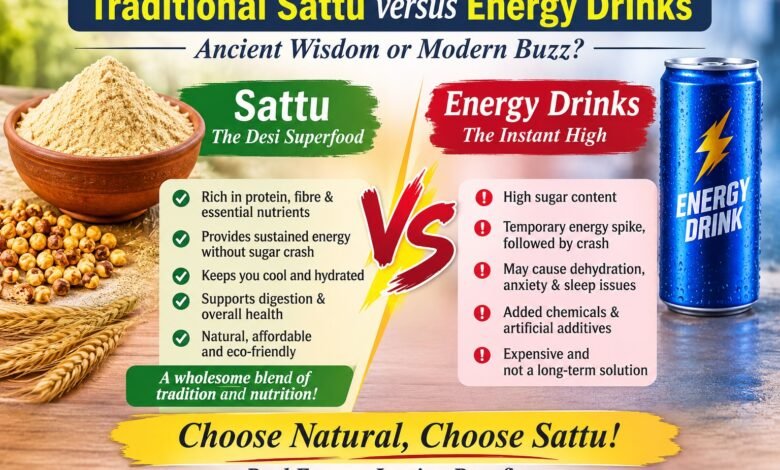
Kolkata, November 11, 2026: As the Food Safety and Standards Authority of India (FSSAI) raises concerns over the labelling and marketing of certain energy drinks, traditional Indian beverages such as sattu are gaining attention as affordable, nutritious alternatives for everyday consumption.
The regulator’s recent action has brought renewed focus on how packaged energy drinks are marketed and whether their labels accurately communicate their ingredients and benefits. Concerns surrounding caffeine intake, added sugar and potentially misleading product claims have also encouraged consumers to examine nutritional information more carefully.
Unlike caffeinated beverages that primarily provide temporary stimulation, sattu offers nutritional value through its natural ingredients. Made from roasted Bengal gram, this traditional Indian food is rich in plant-based protein, dietary fibre and carbohydrates. These nutrients support muscle maintenance, digestive health and the body’s everyday energy requirements.
Popular across Bihar, Jharkhand, Uttar Pradesh and parts of West Bengal, sattu has been an integral part of Indian food culture for generations. A simple preparation involving sattu, water, lemon and a little salt makes a refreshing drink, particularly during summer. It can also be incorporated into parathas, savoury fillings and other traditional dishes.
Speaking about the growing relevance of traditional food ingredients, Devansh Mimani, Director, Ganesh Consumer Products Ltd., said that consumers are becoming increasingly conscious of their food and beverage choices. He highlighted sattu as an example of how traditional ingredients can provide nutritional value in an affordable and convenient form.
He added that Ganesh aims to make traditional foods more accessible to younger consumers through convenient formats while retaining their nutritional value. Describing the beverage as a natural daily source of energy, he emphasised the importance of reconnecting modern consumers with India’s traditional food heritage.
Affordability further strengthens sattu’s appeal. Its simple preparation, nutritional composition and accessibility make it a practical addition to everyday diets across different age groups.
The growing debate around energy drinks is therefore creating an opportunity to reconsider conventional beverage choices. While packaged drinks may offer convenience and temporary stimulation, traditional options such as sattu provide nourishment through familiar food ingredients.
As India becomes increasingly conscious of nutrition and food safety, rediscovering traditional dietary choices could become an important part of healthier everyday consumption.