INDIA’S DIPLOMATIC BALANCING ACT: Between Russia and Ukraine, Can New Delhi Help Shape the Road to Peace?
News Mania Desk/ 20th November 2026

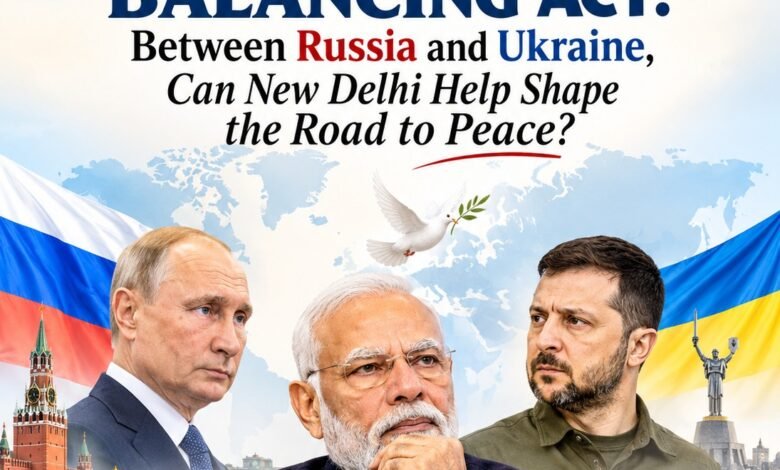
As Washington pushes for a breakthrough, India advances its own de-escalation framework while protecting strategic ties with Moscow and expanding engagement with Kyiv. The outcome could have far-reaching consequences for India’s energy security, economy, defence and global standing.
By Ms.Bornali Biswas-Editor in Chief
NEW DELHI: As the Russia-Ukraine war enters its fifth year, international diplomatic efforts to end the conflict are gathering renewed momentum. With the United States intensifying negotiations, European leaders seeking a greater role and Moscow and Kyiv remaining divided over territory and security guarantees, India is pursuing a carefully balanced diplomatic approach. New Delhi is increasingly moving beyond its traditional call for dialogue and diplomacy, exploring practical proposals to reduce hostilities while maintaining its strategic autonomy.
India’s position is particularly significant because it maintains longstanding defence, energy and strategic relations with Russia while steadily strengthening diplomatic and economic engagement with Ukraine. Rather than joining a military bloc or adopting either side’s position, New Delhi has sought to remain engaged with both countries.
India’s Stand: Strategic Autonomy, Not Military Alignment
Since Russia launched its full-scale invasion of Ukraine in February 2022, India has consistently advocated dialogue, diplomacy and a peaceful settlement. Prime Minister Narendra Modi’s statement that “this is not an era of war” has become a defining expression of India’s diplomatic position.
India has abstained from several United Nations resolutions critical of Russia, while repeatedly emphasising respect for sovereignty, territorial integrity and the importance of resolving disputes through negotiations. Its position reflects a combination of historical relations with Moscow, national security considerations and the need to maintain constructive relations with Western powers.
Russia remains an important defence partner for India, supplying military equipment, technology and maintenance support. Discounted Russian crude oil has also played a significant role in India’s energy security since the conflict began. At the same time, New Delhi has expanded its engagement with Kyiv through high-level diplomatic visits, humanitarian assistance and discussions on reconstruction and bilateral cooperation.
This balancing act is not simply diplomatic symbolism. It reflects India’s determination to make independent foreign policy decisions based on its national interests.
India’s Three-Point Peace Initiative
An important development in November 2026 is India’s reported effort to advance a practical three-part de-escalation framework. External Affairs Minister S. Jaishankar has held discussions with both sides, focusing on measures that could reduce the economic and humanitarian consequences of the war.
The proposed framework covers three critical areas:
- Black Sea shipping security: Ensuring the safety of commercial vessels and uninterrupted movement of essential goods through the Black Sea.
- Protection of energy and critical infrastructure: Exploring arrangements to prevent attacks on energy installations and essential civilian infrastructure.
- Food and energy supply continuity: Addressing the immediate concerns of both countries over grain and energy exports to protect international supply chains.
Ukraine’s Foreign Minister Andrii Sybiha has described India’s proposal as the most comprehensive among several international de-escalation initiatives. However, the framework is primarily aimed at achieving limited ceasefire arrangements and confidence-building measures, not resolving the entire territorial conflict.
The Ministry of External Affairs has confirmed that India is engaging both countries and other interested parties to support efforts towards peace.