Kolkata Rape-Murder Sparks ‘Reclaim the Night’ Protest As Unidentified Miscreants Vandalise RG Kar Hospital

News Mania Desk/Agnibeena Ghosh/15th August 2024
The ongoing outrage following the tragic rape and murder of a postgraduate trainee doctor at RG Kar Medical College and Hospital escalated into violence early Thursday morning. Protesters, fueled by the growing ‘Reclaim the Night’ movement, which gained traction on social media, took to the streets demanding justice for the victim. However, the peaceful protests quickly turned chaotic as unidentified miscreants vandalized the state-run medical facility, causing extensive damage and clashing with law enforcement.
The violence erupted around 12:40 AM when a group of nearly 40 individuals, allegedly disguised as protestors, stormed the hospital premises. They wreaked havoc, destroying property and pelting stones at the police officers who were stationed there. The situation quickly escalated, forcing the police to resort to using teargas to disperse the unruly mob. In the aftermath, several police personnel were injured, and a police vehicle, along with a few two-wheelers, was damaged in the fray.
The incident took place amidst an ongoing agitation by junior doctors at RG Kar Medical College, who have been protesting since August 9, when the 31-year-old doctor was found raped and murdered in the seminar hall of the hospital. The Central Bureau of Investigation (CBI) has since taken over the probe into this heinous crime, following an order from the Calcutta High Court.
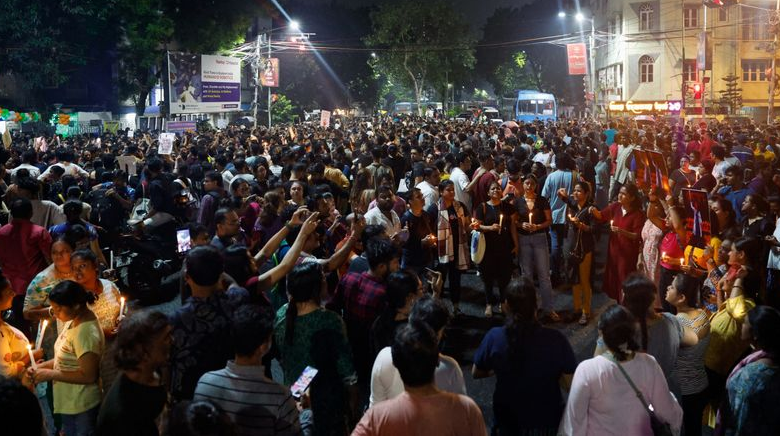
The ‘Reclaim the Night’ protests, which began around 11:55 PM on Wednesday, were initially peaceful, aligning with Independence Day celebrations. Women from various backgrounds, including students, professionals, and homemakers, gathered in large numbers across West Bengal to demand justice for the slain doctor and to voice their collective anger over the pervasive violence against women. The protests spanned several key locations, both in small towns and large cities, with Kolkata serving as a central hub of the demonstrations.
In a show of solidarity, protestors at Biswa Bangla Gate in New Town held a candlelight vigil, with approximately 8,000 people participating. The display of light and resolve was echoed across various locations, including Jadavpur, College Square, Behala, and Shyambazar, as well as in other parts of the state such as Siliguri, Bardhaman, and Jalpaiguri. The protests were marked by the absence of political party flags, with marginalized communities, including LGBTQ groups, prominently displaying their banners, emphasizing the inclusive nature of the movement.
However, the peaceful protests took a dark turn when the violence erupted at RG Kar Medical College. Kolkata Police Commissioner Vineet Goyal, who arrived at the scene around 2 AM, directly blamed the unrest on social media posts and rumors that had been circulating, leading to the unfortunate escalation.
Political reactions were swift, with Trinamool Congress (TMC) general secretary Abhishek Banerjee condemning the violence and calling for those responsible to be held accountable. He stressed the importance of ensuring the safety and security of doctors, whose demands for justice are both fair and justified. On the other hand, Bharatiya Janata Party (BJP) leader Suvendu Adhikari alleged that the vandalism was orchestrated by TMC goons sent by Chief Minister Mamata Banerjee to disrupt the protests.
The tragic incident at RG Kar Medical College has sparked a wave of protests and raised serious questions about the safety of women in public spaces. As the investigation continues, the ‘Reclaim the Night’ movement shows no signs of abating, with thousands across the state and beyond demanding not only justice for the victim but also a fundamental change in how society addresses violence against women.