
Australia Enforces World-First Ban on Social Media for Under-16s
News Mania Desk / Piyal Chatterjee /10th December 2025

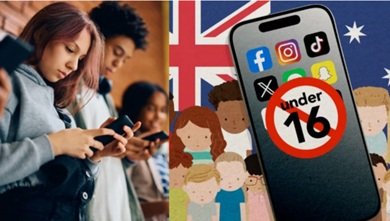
Australia has officially implemented an unprecedented nationwide ban that blocks children under 16 from accessing major social media platforms, marking a landmark moment in global digital regulation. The law, which came into effect at midnight on December 10, requires companies such as TikTok, Instagram, Facebook, YouTube and Snapchat to remove existing accounts belonging to users below the age limit and prevent new sign-ups. Platforms that fail to comply face penalties of up to A$49.5 million.
The move follows months of debate over the psychological and social impact of online platforms on young users. The government has defended the ban as a necessary step to curb issues such as cyberbullying, exposure to explicit or violent content, online grooming, and the growing concern over social media’s role in deteriorating youth mental health. According to officials, the aim is to create a safer digital environment and reduce the influence of addictive algorithms on children.
As the ban took effect, many Australian teenagers discovered that their profiles had been abruptly disabled. Schools and parents reported confusion and disappointment among young people, with some describing the sudden loss of online access as the end of a major part of their social life. Child-safety advocates, however, called the measure long overdue, arguing that existing safeguards were insufficient and easily bypassed.
To implement the law, companies are required to adopt stricter age-verification measures. These may include government ID checks, biometric scanning, facial recognition tools, or behaviour-based screening. Critics argue that these techniques could raise privacy concerns or lead users to migrate to unregulated platforms, potentially exposing them to greater risks. Technology firms have also warned that the accuracy of age-verification systems varies widely, which could result in unintended exclusion of legitimate users or continued access for those who falsify their age.
Civil liberties organisations have criticised the law as overly restrictive, calling it a blunt approach that ignores the importance of digital literacy. They argue that removing teenagers from mainstream platforms could limit avenues for education, expression and community engagement. Some experts also warn that the ban may place additional pressure on parents to monitor online activity, as children could seek alternative channels outside regulatory oversight.
Despite the backlash, the Australian government has remained firmly supportive of the ban. Officials have announced that the policy will be reviewed periodically, with particular attention to its impact on children’s wellbeing, online behaviour, and overall effectiveness in reducing harm. Several countries are monitoring the development closely, with indications that similar measures may be considered elsewhere.
Australia’s decision marks a major shift in global discussions on regulating digital spaces for young people. As the world looks on, the ban has set the stage for renewed debate over how societies balance internet safety, personal freedom and the evolving role of social media in everyday life.