Bombay High Court Says Loudspeakers Not Essential To Religious Practice, Dismisses Mosque Plea
News Mania Desk / Piyal Chatterjee /6th December 2025

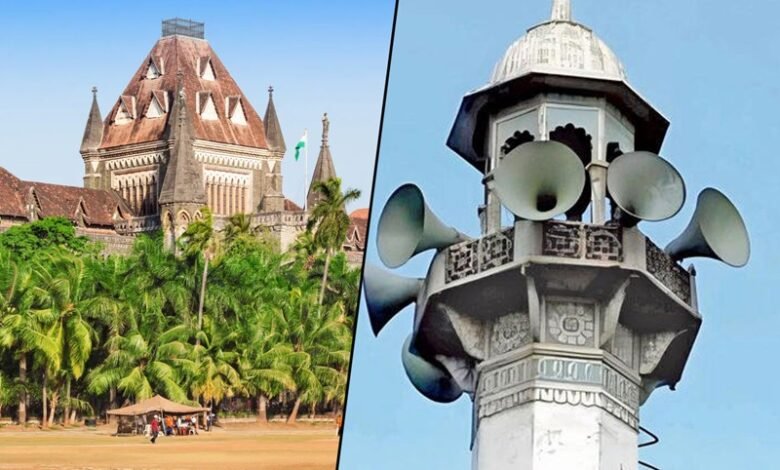
The Nagpur bench of the Bombay High Court has ruled that the use of loudspeakers does not constitute an essential part of practising any religion, while dismissing a petition filed by a mosque in Gondia seeking permission to resume amplified calls for prayer. The court emphasised that no faith mandates the use of sound-amplifying devices, and that the rights of worshippers cannot override the right of others to live without noise disturbance.
The petition was submitted by Masjid Gousiya, which argued that loudspeaker-based prayers formed part of its religious practice. The division bench of Justices Anil Pansare and Rajesh Patil rejected this claim, noting that the mosque had not produced any religious text or legal precedent establishing loudspeaker use as compulsory. The court reiterated earlier judicial findings that while the Constitution protects the right to profess and practise religion, this does not include a right to create noise that infringes on public peace.
The bench observed that individuals also possess the right not to listen, particularly when amplified sound invades private spaces. It stated that no religion prescribes worship in a manner that disturbs others, and highlighted the potential impact of high decibel levels on the elderly, students, the ill and those working night shifts. The judges added that public health and tranquillity must be prioritised when balancing religious freedoms with broader societal rights.
Referring to noise-control regulations, the court stressed that sound amplification must remain within prescribed limits and cannot be used without valid permissions. Granting special allowance to any place of worship, it said, would undermine the legal framework designed to curb noise pollution across the state. Authorities were instructed to ensure strict compliance with noise norms.
The ruling reinforces the judiciary’s long-standing position that religious expression cannot extend to activities that disrupt the peace of surrounding communities. It also underscores that constitutional rights operate within reasonable restrictions, particularly when public order and health are at stake.