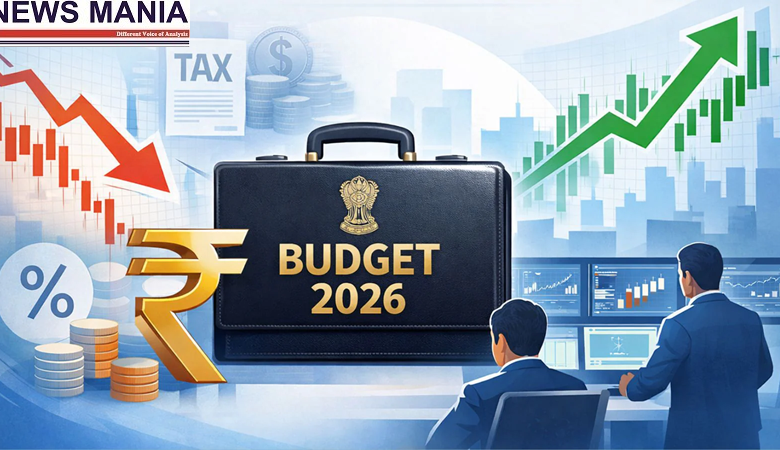
As the Union Budget 2026 approaches, expectations of significant income tax relief for salaried taxpayers appear tempered, with experts predicting only limited changes rather than sweeping cuts. While middle-class taxpayers continue to hope for lower tax rates and revised slabs, indications suggest the government is likely to prioritise fiscal prudence over major concessions.
According to tax professionals, the government may avoid drastic changes to income tax slabs, especially after undertaking substantial reforms in recent years. Instead, the emphasis is expected to remain on strengthening and popularising the new tax regime, which has been positioned as simpler and more streamlined compared to the old system. Any changes announced are likely to be incremental and aimed at fine-tuning rather than restructuring the framework.
One area where salaried taxpayers could see some relief is through targeted measures. Experts suggest that the government may consider increasing the standard deduction under the new tax regime, which would provide uniform relief across income groups without significantly impacting revenue collections. There is also speculation about minor adjustments to tax slabs to account for inflation and rising living costs, though these changes are expected to be modest.
Major tax giveaways are considered unlikely due to the government’s broader financial commitments. With continued spending required on infrastructure development, defence, social welfare programmes and green energy initiatives, maintaining fiscal discipline remains a key priority. These constraints limit the scope for large-scale income tax reductions in the upcoming budget.
For salaried individuals, this means expectations should remain realistic. While Budget 2026 may offer some comfort through small tweaks that marginally reduce the tax burden, it is unlikely to deliver dramatic relief in the form of sharp rate cuts or a significantly higher tax-free income threshold.