China Showcases Humanoid Robots as Pillars of Its AI Strategy
News Mania Desk / Piyal Chatterjee / July 27, 2025

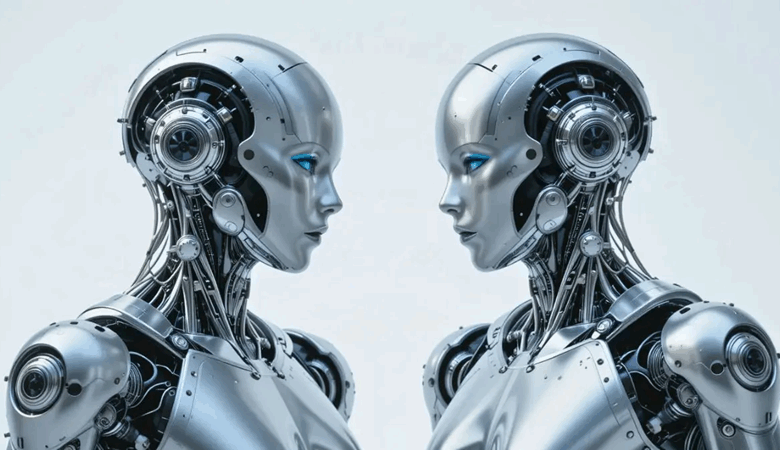
China is rapidly positioning humanoid robots at the forefront of its artificial intelligence (AI) strategy, with a strong display of innovation and ambition at the recent World AI Conference in Shanghai. The event featured dozens of robots performing real-world tasks such as stacking shelves, serving drinks, playing mahjong, and even boxing—demonstrating China’s vision of integrating “embodied AI” into daily life.
The Chinese government has identified humanoid robots as a core technological focus. According to policy documents, China aims to achieve mass production by 2025 and reach global innovation benchmarks in robotic “brains, cerebellums, and limbs” by 2027. Officials also plan to establish multiple globally influential robotics companies and foster regional industrial hubs to support the sector.
Leading this charge are domestic firms like AgiBot, which trains its robots by having them perform tasks like folding clothes and preparing sandwiches. These repetitive actions help refine AI capabilities through self-learning. During a recent visit, President Xi Jinping jokingly suggested such robots could one day join China’s national football team, signaling top-level political support for the industry.
Other players include Unitree Robotics, which launched its R1 humanoid for just $5,900. It can run, jump, and perform acrobatic moves, reflecting rapid progress in both affordability and performance. Meanwhile, UBTech’s Walker S2 made headlines as the first robot able to autonomously change its battery, allowing uninterrupted operation.
China now produces around 70% of the world’s embodied AI robots, with nearly 100 models released since 2024. Shenzhen has emerged as a key manufacturing hub, supported by strong public-private collaboration and robust supply chains.
Experts view this aggressive push as potentially transformative—not only for manufacturing and service industries but also for China’s standing in global AI leadership.