Crores In Kickbacks, Senior Officials And A Guru In India’s Largest Medical Fraud
News Mania Desk / Piyal Chatterjee / 6th July 2025

The Central Bureau of Investigation (CBI) has uncovered what it calls one of the most significant medical college frauds in the nation’s history, extending across several states and involving high-ranking officials, intermediaries, prominent educators, and even a self-proclaimed godman.
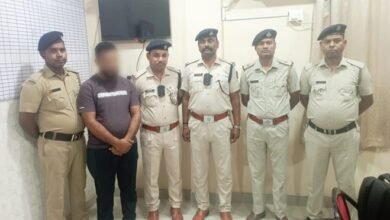
In this shocking CBI investigation revealing the decay within India’s medical education system, a nationwide bribery scheme has been uncovered, involving prominent figures such as DP Singh (former UGC Chairman and current TISS Chancellor), self-proclaimed godman Rawatpura Sarkar, Suresh Singh Bhadoria from Indore’s Index Medical College, along with a large network of officials and intermediaries. The CBI has listed 35 people in its FIR, including former IFS officer Sanjay Shukla, who previously held the position of chairman of the Real Estate Regulatory Authority (RERA). Shukla, an ex-director of the Chhattisgarh Forest Department and PCCF, is associated with the Rawatpura group as a trustee. Up to now, only one individual — director Atul Tiwari — has been apprehended in the matter.
Fraudulent faculty, bogus inspections, and released documents were elements of this multi-crore scam that spanned from Rajasthan, Gurgaon, and Indore to Warangal and Visakhapatnam, involving crores transferred via hawala and banking channels — all to attain illicit approvals for inferior medical colleges.
The supposed scheme also involves officials from the Ministry of Health.
The inquiry started with a case involving bribery for an inspection at Sri Rawatpura Sarkar Institute of Medical Sciences and Research (SRIMSR) in Raipur, where six people, comprising three doctors, were detained for reportedly taking Rs 55 lakh to provide a favorable inspection report.
The CBI apprehended the doctors in the act, seizing Rs 38.38 lakh from a member of the inspection team chief’s staff and Rs 16.62 lakh from the home of another official. The CBI reports that the whole bribe was organized, gathered through hawala channels, and allocated among the group.
The mention of Rawatpura Sarkar, or Ravishankar Maharaj, in the FIR has garnered interest because of his enduring connections with prominent politicians, officials, and civil servants. Commonly known as the “Baba close to power,” his pictures with IAS, IPS officials, and elected leaders have gained significant traction on social media. Critics claim his trust was granted improper advantages in government programs, road access initiatives, and even electricity subsidies—allegations the trust has consistently refuted.
This isn’t the first occasion that Rawatpura Sarkar has attracted controversy. His organization has been charged with land encroachments, operating unauthorized colleges, coercing students into religious practices, and even subjecting female devotees to mental harassment within ashrams. Human rights commissions have investigated these incidents, but few advanced to formal prosecutions until recently. Sources indicate that over 40 medical colleges in India might have secured their recognition through bribery, forged documents, and altered inspections.
As the investigation expanded, the CBI discovered a similar scheme operating from Index Medical College in Indore, where officials reportedly utilized fictitious faculty, manipulated biometric attendance, and even generated counterfeit experience certificates to mislead National Medical College (NMC) evaluators. Authorities suspect that Bhadoria and Rawatpura Sarkar—both hailing from Lahar in Madhya Pradesh’s Bhind district—established a strong network, demanding Rs 3 to 5 crore from private colleges throughout India to ensure NMC recognition, regardless of quality or facilities.
This was not an isolated deception. The CBI uncovered a complex web of information leaks, fake inspections, bribery, and illegal collusion that involved various levels of the regulatory framework. Officials in New Delhi reportedly took pictures of internal documents and sent them via WhatsApp to agents, who then notified college administrations ahead of time.
The confidential data was received by Virendra Kumar from Gurgaon, Manisha Joshi from Dwarka, and various representatives of private institutions, such as Mayur Raval from Geetanjali University in Udaipur.
Central to this information scheme was Jitu Lal Meena, a past full-time member of the Medical Assessment and Rating Board (MARB), who, as stated in the FIR, functioned as a crucial intermediary and leveraged his influence to obtain bribes. In a startling revelation, the CBI claimed that part of these illegal funds was supposedly utilized by Meena to construct a Hanuman temple in Rajasthan for Rs 75 lakh.
The CBI revealed that B Hari Prasad, an agent from Kadiri in Andhra Pradesh, and associates Ankam Rambabu in Hyderabad and Krishna Kishore in Visakhapatnam orchestrated the display of phony faculty and counterfeit patients during NMC inspections. In one instance, it was reported that Krishna Kishore gathered Rs 50 lakh from the director of Gayatri Medical College, while entities such as Father Colombo Institute of Medical Sciences in Warangal paid over Rs 4 crore for clearances, with bribes funneled through official banking avenues to seem authentic.