Defence Minister Shri Rajnath Singh Addresses Sagar Sankalp – Reclaiming India’s Maritime Glory (The Week–GRSE Conclave)
Addressing the gathering, Shri Rajnath Singh highlighted the historic maritime importance of Bengal and described it as a symbol of nation's pride in the country’s maritime heritage.
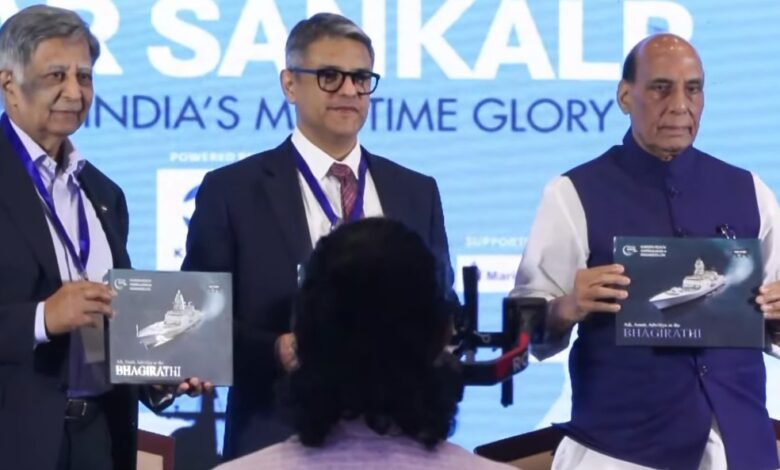
Kolkata, March 6, 2026 : Defence Minister Shri Rajnath Singh today addressed the “Sagar Sankalp – Reclaiming India’s Maritime Glory” conclave organised by Garden Reach Shipbuilders & Engineers (GRSE) in collaboration with The Week in Kolkata. The event brought together leaders from defence, industry and maritime sectors to deliberate on India’s maritime capabilities, shipbuilding ecosystem and strategic ambitions.
The conclave was attended by Chairman and Managing Director of GRSE, Shri P. R. Hari; Managing Director of Bharat Forge, Shri Baba Kalyani; Chief Associate Editor of The Week, Shri Riyadh Mathew and Chairman of the Indian Register of Shipping, Shri Arun Sharma.
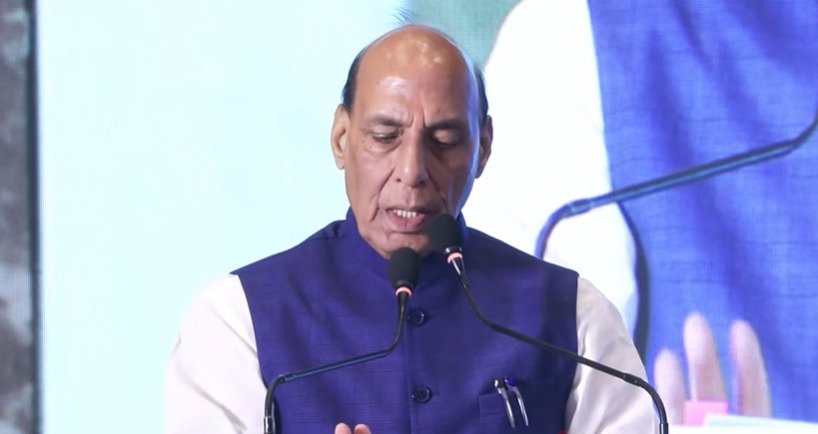
Addressing the gathering, Shri Rajnath Singh highlighted the historic maritime importance of Bengal and described it as a symbol of nation’s pride in the country’s maritime heritage. He noted that Kolkata and the surrounding region have played a significant role in India’s shipbuilding and maritime trade for centuries.
The Defence Minister emphasised that institutions like GRSE have been instrumental in strengthening India’s naval capability and defence manufacturing ecosystem.
Shri Singh highlighted the long-standing legacy of GRSE, whose origins date back to the 19th century. Over the decades, the shipyard has built around 790 vessels, including more than 110 warships, such as frigates and anti-submarine warfare ships, significantly contributing to the strength of the Indian Navy.
The Defence Minister stated that GRSE has emerged as a key player in India’s defence diplomacy and maritime capability building through its strong indigenous design capabilities, high levels of indigenisation and a robust MSME supply-chain network.
The Defence Minister also stressed the importance of studying and reviving India’s ancient shipbuilding legacy, which reflect the country’s deep maritime knowledge and engineering excellence.
During the programme, the Defence Minister also released the GRSE History Book, commemorating the institution’s rich legacy and contributions to India’s maritime and defence sectors.

Shri Rajnath Singh noted that oceans today are the centres of strategic power and global alliances. They are vital for international trade routes and supply chains, making maritime capability central to national security and economic growth.
He stated that India must build confidence, capability and a clear strategic vision to emerge as a global maritime leader.
The Defence Minister reiterated that strengthening Defence Public Sector Undertakings (DPSUs) remains a key priority, with emphasis on improving efficiency, accessibility and global competitiveness.
He highlighted that India’s shipyards will be developed as future-ready facilities, adopting modern technologies such as:
Digital ship design tools
Modular construction techniques
AI-enabled optimisation
Green shipbuilding technologies
GRSE, he noted, has emerged as a pioneer in adopting such advanced shipbuilding practices.
Shri Singh stated that the Government is committed to expanding private sector participation in defence manufacturing. The target is to achieve 50% participation from the private sector in the defence ecosystem, with 25% of defence supply expected to come from private companies.
He further highlighted the rapid growth of India’s defence production and exports:
Domestic defence production: ₹1.5 lakh crore last year
Defence exports: ₹24,000 crore last year
Expected defence exports this year: ₹29,000 crore
Target -defence exports: to catapult to ₹50,000 crore by 2030
Highlighting India’s long-term maritime strategy, Shri Rajnath Singh said that under the Maritime Amrit Kaal Vision 2047, the Government plans to invest ₹3 lakh crore to develop shipbuilding clusters across the country.
India aims to:
- Become a Top 10 shipbuilding nation by 2030
- Enter the Top 5 shipbuilding nations globally by 2047
The Defence Minister also noted that defence industrial corridors and shipbuilding clusters will play a crucial role in strengthening the domestic manufacturing, innovation and employment generation.
Concluding his address, Shri Rajnath Singh said, initiatives like Sagar Sankalp represent India’s determination to reclaim its maritime legacy and build a strong, self-reliant and globally competitive maritime ecosystem.
(This story has not been edited by News Mania staff and is published from a PIB- Media Release)