Experts Explain Limerence and How to Overcome It
News Mania Desk /Piyal Chatterjee/ 24th March 2026

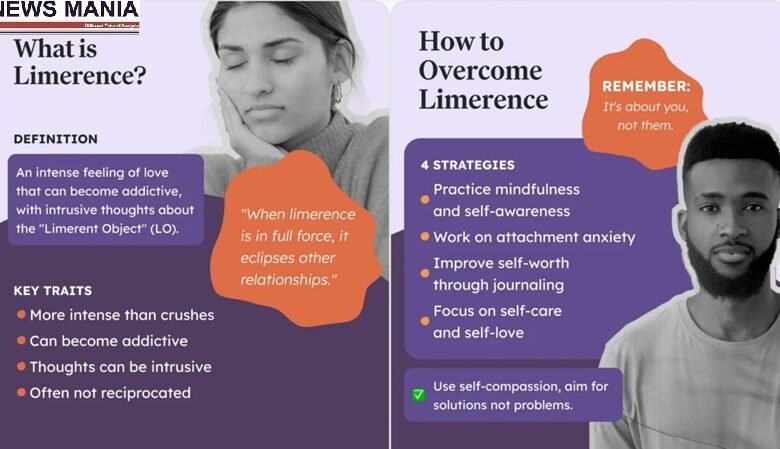
Mental health experts are drawing attention to Limerence, a psychological condition characterised by intense, obsessive infatuation that is often mistaken for love. A Portland-based therapist has explained that this state involves persistent thoughts about a person, emotional dependency, and a strong craving for reciprocation, even in the absence of a stable relationship.
Unlike a typical crush, limerence can significantly disrupt daily life. Individuals may find themselves constantly replaying interactions, overanalysing messages, and experiencing emotional highs and lows based on small responses. This can impact productivity, mental health, and personal relationships.
Experts say that emotional vulnerability is a major trigger. People dealing with loneliness, low self-esteem, or unmet emotional needs are more susceptible to developing such intense attachments. Uncertainty also plays a crucial role—mixed signals or inconsistent behaviour from the other person can intensify the fixation, keeping individuals emotionally engaged.
Modern communication patterns, especially through social media, further amplify the issue by creating constant reminders and opportunities to reinforce idealised perceptions. In many cases, individuals project unrealistic qualities onto the person of interest, deepening their emotional attachment.
To overcome limerence, professionals recommend first recognising the condition and distinguishing it from genuine love. Setting boundaries, such as limiting contact or reducing exposure, is seen as an important step. Focusing on self-care, building routines, and engaging in personal growth activities can help redirect attention.
Therapeutic approaches, including cognitive behavioural techniques, may also assist individuals in addressing underlying emotional patterns. Experts emphasise that developing self-awareness is key to breaking the cycle and forming healthier, more balanced relationships.