Former Nepal PM K.P. Sharma Oli arrested over role in protest crackdown
News Mania Desk/ Piyal Chatterjee/28th March 2026

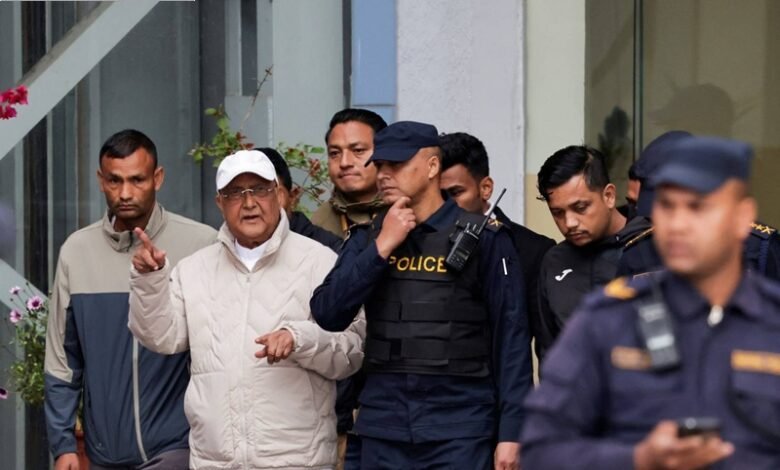
Former Nepal Prime Minister K. P. Sharma Oli was arrested on Saturday in connection with his alleged involvement in a violent crackdown on anti-government protests that shook the country in 2025. The arrest represents a major political development in Nepal, coming amid a shift in leadership and growing calls for accountability.
Oli, along with former home minister Ramesh Lekhak, was taken into custody from his residence in Kathmandu. The action follows the rise of a new government led by Balendra Shah, who had campaigned on promises to investigate the deadly protests and hold those responsible accountable. Authorities described the arrests as part of a legal process aimed at delivering justice rather than a politically motivated move.
The case stems from the large-scale protests that erupted in September 2025, often referred to as the “Gen Z protests.” The demonstrations were led primarily by young people frustrated with corruption, governance failures, and controversial policy decisions, including restrictions on social media. What began as peaceful protests soon escalated into widespread unrest, with violent clashes reported between demonstrators and security forces.
According to official findings, security personnel opened fire on protesters during the height of the unrest, resulting in multiple casualties. Initial reports indicated that at least 19 people were killed in police firing, while the overall death toll from the protests later rose significantly, with dozens more losing their lives and many others sustaining injuries. The scale of the violence triggered nationwide outrage and ultimately contributed to the collapse of Oli’s government.
A government-appointed investigative panel later examined the events and recommended legal proceedings against Oli and his former home minister. While the panel did not conclusively establish that they directly ordered the use of lethal force, it held them responsible for failing to prevent the escalation and for lapses in governance. The report suggested that negligence at the highest levels played a role in the tragic outcome.
Supporters of Oli have criticised the arrest, calling it politically driven and alleging that due process has not been fully followed. His legal team has also challenged the charges, arguing that the evidence does not justify detention. Analysts believe the arrests signal a stronger push for accountability and institutional reform, though they may also deepen political divisions in a country already navigating a period of transition and uncertainty.