From Pluralism to Power: India’s Democratic Model at a Defining Moment
By Ratnajyoti Dutta
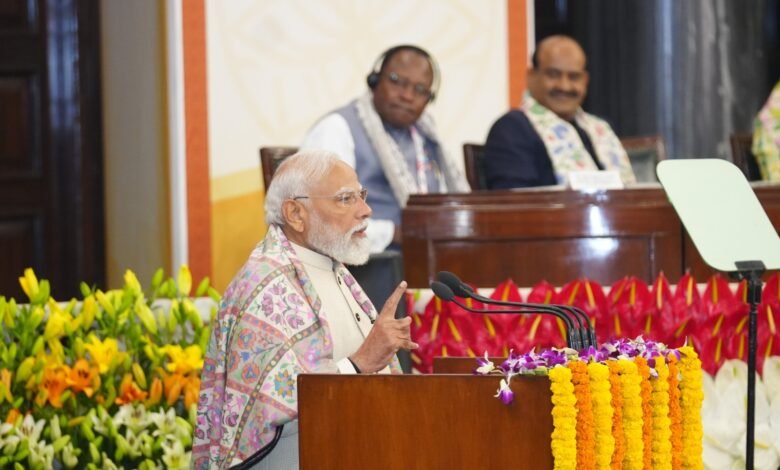
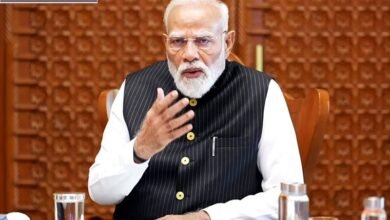
Prime Minister Narendra Modi has advanced a clear proposition: India has transformed its vast diversity from a perceived weakness into the core strength of its democracy.
Speaking at the 28th Conference of Speakers and Presiding Officers of the Commonwealth (CSPOC 2026) in New Delhi, he argued that India’s democratic journey answers early sceptics who doubted whether such a plural nation could remain stable and prosperous under democratic governance.
At Independence, many questioned whether democracy could endure in a country marked by extraordinary linguistic, religious and cultural complexity. Others doubted whether a democratic framework could deliver economic growth at scale. Modi’s address directly confronted both doubts. He asserted that India’s democratic institutions have provided “stability, speed and scale,” enabling political continuity alongside sustained development.
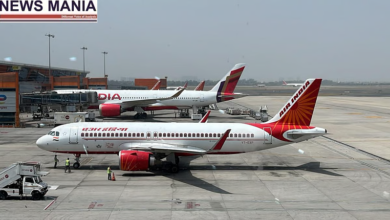
India’s economic trajectory supports this claim. The country ranks among the fastest-growing major economies. It operates the world’s largest digital payment ecosystem through UPI, stands as the largest vaccine producer, and hosts the third-largest startup ecosystem. It is the second-largest steel producer, the largest milk producer and the second-largest rice producer globally. India also boasts the third-largest aviation market and some of the largest railway and metro networks in the world.
These achievements reflect more than economic scale; they demonstrate how governance, technology and democratic accountability can reinforce one another. Modi highlighted “last-mile delivery” as the defining feature of Indian democracy — a model that aims to ensure benefits reach every citizen without discrimination. By linking democracy with delivery, he framed electoral legitimacy and welfare outcomes as complementary forces.
The assertion that nearly 250 million people have moved out of poverty in recent years strengthens this narrative. Whether driven by welfare expansion, infrastructure investment, digital governance or economic reform, the broader message remains that democracy can deliver socio-economic transformation. In a global climate where some authoritarian systems claim greater efficiency, India presents itself as evidence that democratic governance can combine inclusivity with momentum.
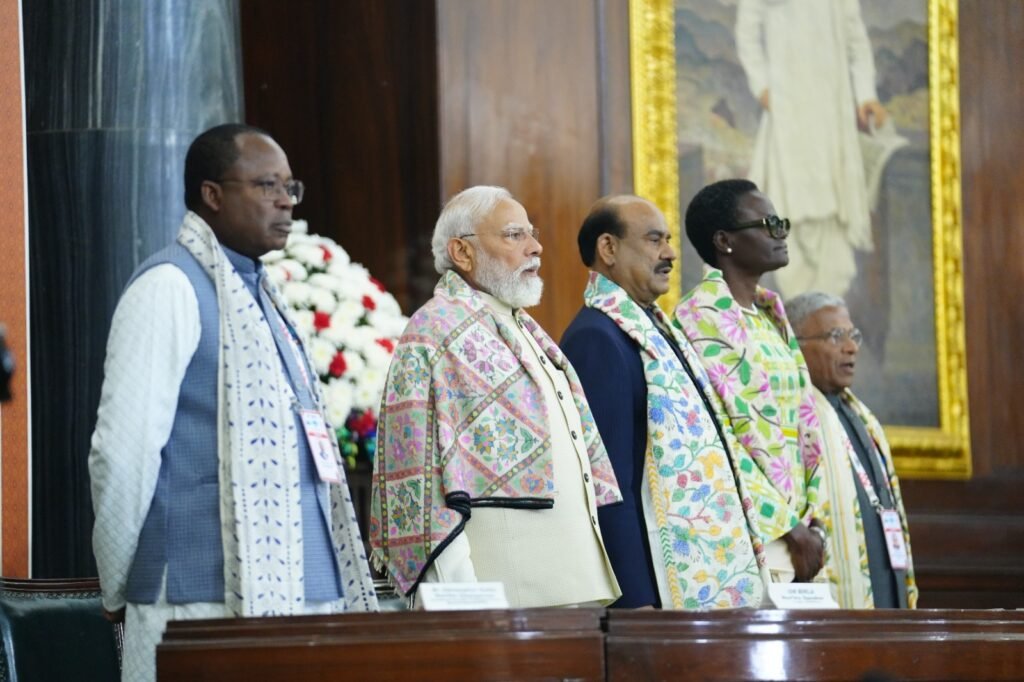
The symbolism of the venue reinforced the message. On January 15, Modi addressed delegates in the Central Hall of the old Parliament building, where the Constituent Assembly drafted the Indian Constitution. By doing so, he connected contemporary governance with constitutional legacy. He also described India as the “Mother of Democracy,” citing participatory traditions in the Vedas, ancient village assemblies, the Buddhist Sangha and even a 10th-century Tamil Nadu inscription describing democratic village administration. Through this historical framing, he sought to root Indian democracy in civilisational heritage rather than colonial inheritance.
Birla’s take
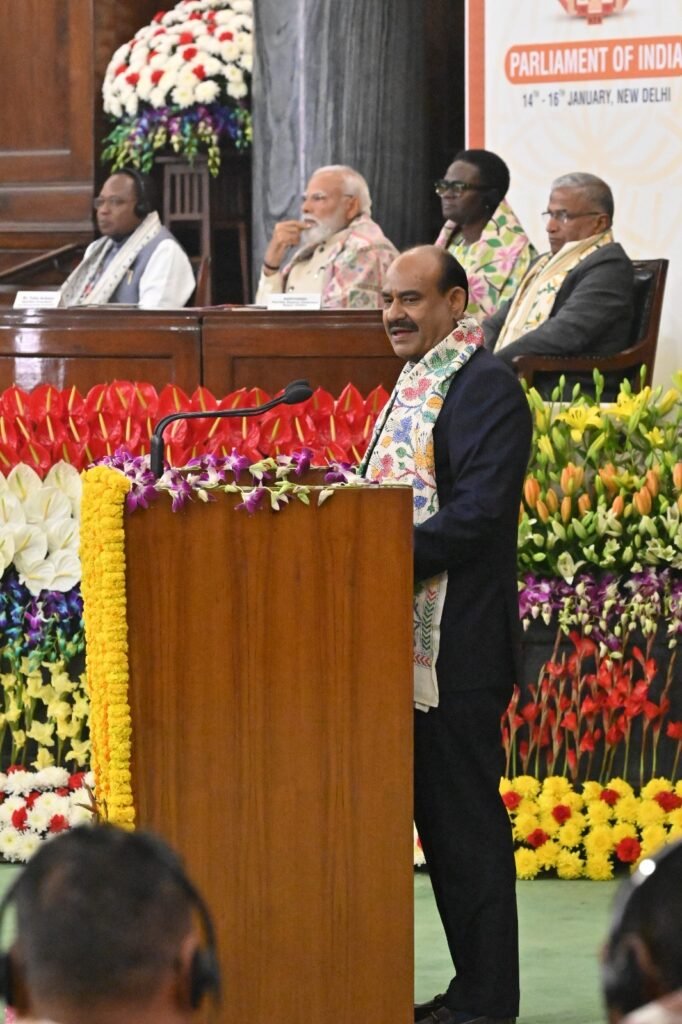
The conference theme — “Effective Delivery of Parliamentary Democracy” — echoed this emphasis on performance. In his valedictory address, Lok Sabha Speaker Om Birla argued that democratic institutions remain strong when they function with transparency, inclusivity, responsiveness and accountability. Transparency builds trust; inclusivity ensures representation of marginalised voices; responsiveness keeps institutions aligned with public expectations.
Birla also addressed emerging challenges. Artificial intelligence and social media can deepen civic engagement and improve governance, but they can also spread misinformation and intensify social division. His call for ethical AI and accountable digital platforms reflected a broader global dilemma: how to harness technological innovation without undermining democratic integrity.
Growing profile
The scale of participation at CSPOC 2026 underscored India’s growing diplomatic profile. Representatives from 42 Commonwealth countries attended, marking one of the largest participations in the forum’s history. The conference returned to New Delhi after a 16-year gap; India previously hosted it in 1971, 1986 and 2010. By convening parliamentary leaders from across the Commonwealth, India signalled its intent to play a larger role in shaping global democratic discourse.
Collectively, the deliberations reveal a broader strategic ambition. India does not seek merely to defend democracy; it aims to redefine its contemporary relevance. By highlighting economic dynamism, digital infrastructure and welfare outreach, the leadership argues that democracy can be both efficient and inclusive. By invoking civilisational continuity, it asserts historical legitimacy. By engaging global parliamentary platforms, it enhances diplomatic stature.
Yet the durability of this narrative depends on institutional resilience. Democracies draw strength not only from growth statistics or electoral victories, but from the daily functioning of independent institutions, vibrant legislatures and informed citizen participation. Sustaining transparency, protecting inclusivity and managing technological disruption will remain central to India’s democratic credibility.
At a time when democratic systems face mounting scepticism worldwide, India’s assertion carries weight: diversity need not fragment governance. When institutions remain accountable and responsive, pluralism becomes democratic capital. In advancing this argument, India positions itself not only as the world’s largest democracy, but as a laboratory for how diversity and development can coexist within a constitutional framework.
(The writer is a Delhi-based senior journalist.)