Gen Z-Led Uprising Topples Madagascar Government, President Rajoelina Flees Amid Growing Unrest
News Mania Desk / Piyal Chatterjee / 14th October 2025

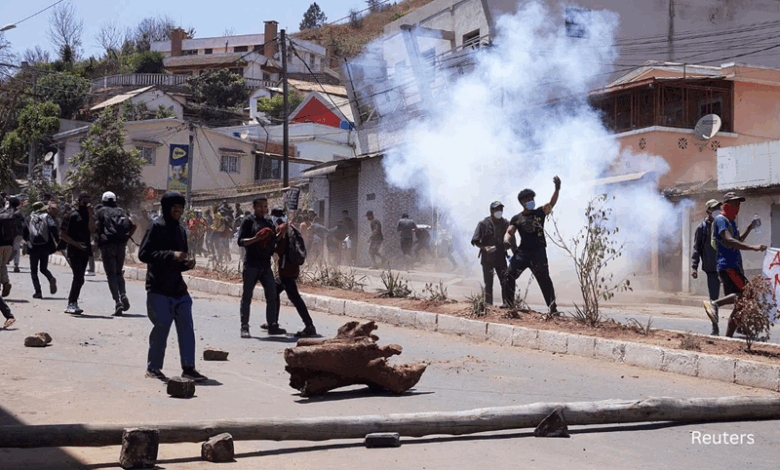
In a dramatic political upheaval, Madagascar’s government has been toppled following weeks of intense protests led by the country’s youth, with President Andry Rajoelina fleeing abroad citing threats to his life. The uprising, driven largely by Generation Z activists and supported by sections of the military, marks another instance of young citizens reshaping political landscapes across the developing world.
The unrest began in late September as peaceful demonstrations over frequent power outages and water shortages. However, what started as frustration over infrastructure quickly evolved into a powerful anti-government movement denouncing corruption, unemployment, and inequality under Rajoelina’s rule. The protests swelled in major cities, drawing tens of thousands of young demonstrators, many organized through social media platforms such as TikTok and X (formerly Twitter).
Tensions escalated when an elite army unit known as CAPSAT defected to the protesters’ side, declaring that they no longer recognized the authority of the president or his cabinet. The unit announced that it was assuming control of the armed forces “to protect the people” and restore stability. The defection effectively ended Rajoelina’s grip on power, prompting him to dissolve the National Assembly through an emergency decree.
In a late-night televised statement from an undisclosed location, Rajoelina described the events as a “coup attempt” and said he was leaving temporarily “to protect his family and preserve constitutional order.” His departure, however, has been interpreted by observers as an admission of defeat amid collapsing government authority.
According to United Nations estimates, at least 22 people have died in the unrest, with hundreds injured during clashes between security forces and demonstrators. International concern is mounting as Madagascar faces the possibility of a prolonged political vacuum.
The protesters, largely composed of students, young professionals, and unemployed youth, have vowed not to leave the streets until a new interim administration is formed. Their demands include free elections, anti-corruption reforms, and improved public services, signaling a generational call for systemic change.
The crisis in Madagascar follows a pattern seen elsewhere, where Gen Z-led movements have successfully challenged entrenched political elites. Analysts have drawn parallels to recent youth uprisings in Nepal and Kenya, emphasizing how digitally connected young populations are increasingly shaping governance through collective mobilization and online advocacy.
International responses have so far been cautious. The African Union has urged restraint and dialogue, while Western governments are closely monitoring developments.
As Madagascar enters a new and uncertain chapter, many hope this youth-driven movement will lead to democratic renewal rather than further instability. Whether Gen Z’s momentum can translate into lasting institutional change remains the central question in the island nation’s unfolding story.