Design in India, Design for the World: PM Modi’s Vision for a Global Manufacturing Leader

News Mania Desk/Agnibeena Ghosh/15th August 2024
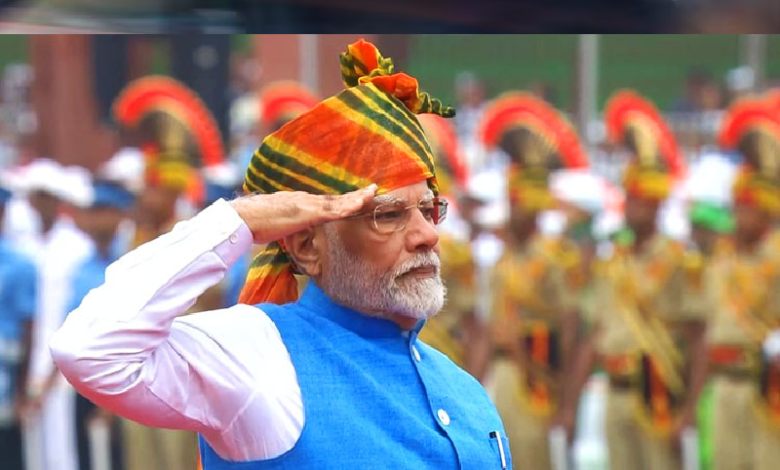
During his Independence Day address from the historic Red Fort, Prime Minister Narendra Modi articulated a forward-thinking vision for India’s future, setting the stage for the nation to emerge as a global leader in various sectors. One of the key highlights of his speech was the introduction of the phrase “Design in India, Design for the World,” emphasizing the need to develop indigenous design capabilities that cater to both domestic and international markets.
PM Modi’s call for a design revolution in India is not merely about creating products; it is about establishing a new standard of quality that aspires to become a global benchmark. He envisions a future where Indian products are synonymous with excellence and innovation, meeting the highest international standards. This vision is part of a broader strategy to position India as a dominant force in the global manufacturing arena, leveraging the country’s vast resources and skilled workforce.
A significant focus of PM Modi’s speech was on the semiconductor industry, a sector critical to the modern digital economy. With semiconductors being the backbone of electronic devices ranging from smartphones to industrial automation systems, India’s ambitions in this field are both timely and essential. The Prime Minister highlighted the government’s commitment to bolstering this nascent industry, with substantial investments being funneled into the establishment of semiconductor plants across the country. The government has already allocated $10 billion under the Semicon India Program to develop the semiconductor and display manufacturing ecosystem, with ongoing projects in states like Gujarat and Assam.
PM Modi’s vision extends beyond traditional manufacturing sectors to include emerging industries such as gaming. He urged Indian professionals to tap into the country’s rich cultural heritage to create unique, Made in India gaming products that could capture the global market. With 442 million online gamers, India already has the second-largest gaming user base in the world, second only to China. The Prime Minister sees this as an opportunity for India to not just participate but lead in the global gaming industry.
Environmental sustainability was another cornerstone of PM Modi’s address. He reiterated India’s commitment to combating climate change through green growth and the creation of green jobs. The Prime Minister emphasized that as India transitions to a greener economy, there will be a surge in employment opportunities in renewable energy and environmental conservation. India’s ambitious goals include becoming a global leader in green hydrogen production, a critical component of the country’s strategy to reduce its carbon footprint.
At the COP26 summit in 2021, India made a series of bold pledges, including achieving 500 GW of non-fossil electricity capacity and reducing emissions by 1 billion tonnes by 2030. PM Modi reaffirmed these commitments, noting that India is on track to exceed these targets, with non-fossil sources already contributing 44% of the country’s energy needs—a figure expected to rise to 65% by 2030.
This Independence Day marked the 11th time PM Modi addressed the nation from the Red Fort, making him the third Prime Minister after Jawaharlal Nehru and Indira Gandhi to achieve this milestone. The theme for this year’s celebration, ‘Viksit Bharat @ 2047,’ reflects the government’s ambitious goal to transform India into a developed nation by the time it celebrates its centenary of independence.