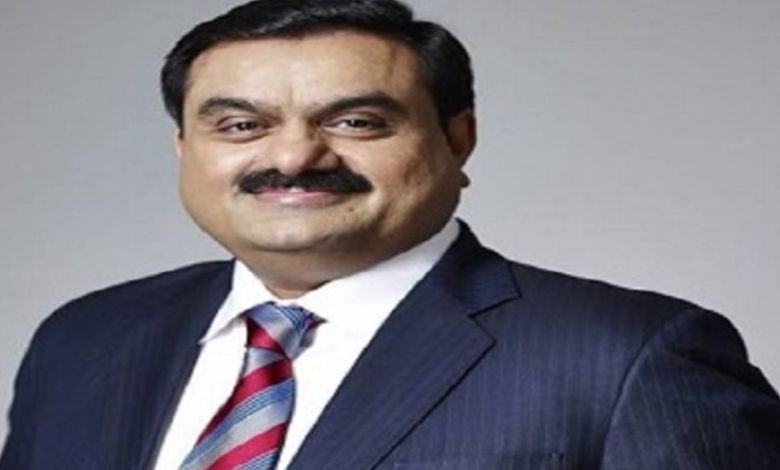
Asia’s richest man Gautam Adani and his family have pledged to donate Rs 60,000 crore to charity to mark his 60th birthday.
Donations to be utilized in healthcare, education, and skill development, his logistics-to-energy conglomerate said in a statement.
The donation will be managed by the Adani Foundation.
Adani, a first-generation entrepreneur who turned a small agri-trading firm into a conglomerate spanning coal trading and mining, ports and airports, power generation, gas distribution, green energy, data centre and cement, turns 60 on Friday.
The money pledged for charity is just over 8 per cent of Adani’s USD 92 billion wealth.
“On the year of the centenary birth anniversary of Gautam Adani’s father Shantilal Adani, and Gautam Adani’s own 60th birthday, the Adani Family has committed a donation of Rs 60,000 crore to a range of social causes,” the statement said.
This is one of the largest charitable donations in Indian corporate history and joins the ranks of global billionaires like Mark Zuckerberg and Warren Buffett. Wipro’s Azim Premji and mining mogul Anil Agarwal have committed a large part of their wealth to philanthropy.
“To utilize the potential of India’s demographic advantage, there is an ever-growing need to focus on the areas of healthcare, education, and skill development,” the statement said.
“The Adani Foundation has gained rich experience in working with communities focused on integrated development efforts across all these areas.”
Addressing these challenges can significantly enhance the competence and competitiveness of our future workforce.
“In addition to being the 100th birth anniversary of my inspiring father, this year also happens to be the year of my 60th birthday and therefore the family decided to contribute Rs 60,000 crores towards charitable activities related to healthcare, education, and skill development, especially in the rural regions of our nation,” Adani said.
“At a very fundamental level, programs related to all these three areas should be seen holistically and they collectively form the drivers to build an equitable and future-ready India. Our experience in large project planning and execution and the learnings from the work done by the Adani Foundation will help us uniquely accelerate these programs.
“This contribution from the Adani Family intends to draw upon some of the brightest minds that have a passion to make a difference in the Adani Foundation’s journey to do more towards fulfilling our ‘Growth with Goodness’ philosophy.”
On this occasion, Azim Premji, Chairman of Azim Premji Foundation and founder chairman of Wipro Ltd and widely recognized as one of the greatest philanthropists, said, “Gautam Adani and his family’s commitment towards philanthropy should set an example that we can all try to live Mahatma Gandhi’s principle of Trusteeship of Wealth at the peak of our business success and need not wait for our sunset years”.
The statement further quoted him as saying that “the challenges and possibilities of our country demand that we work together as one, cutting across all divides of wealth, region, religion, caste, and more. I wish Gautam Adani and his Foundation the very best in this important national endeavor”.
Source: PTI
Photo: Internet