How India Feels the Shockwaves of United States, Israel, and Iran War
Ms.Bornali Biswas,Editor in Chief
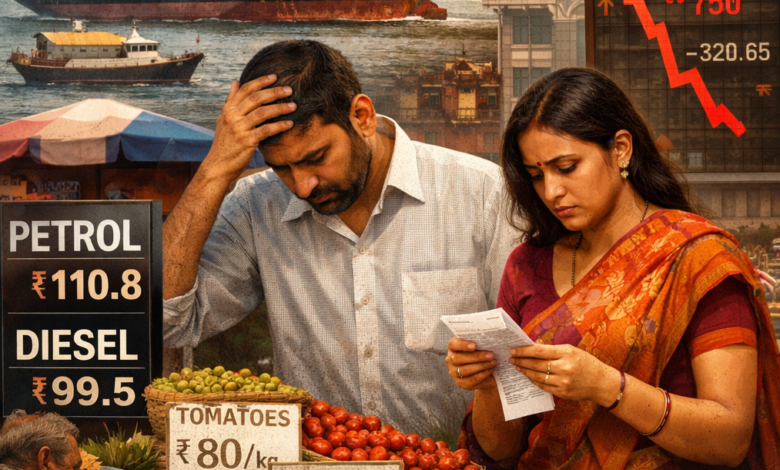
As the conflict between the United States, Israel, and Iran flares into a broader military confrontation, its reverberations are being felt far beyond the Middle East — and India, with its deep economic and strategic links to the region, is squarely in the crosshairs. What might seem like a distant geopolitical struggle is fast becoming a domestic story of rising costs, disrupted trade, and economic uncertainty.
The most immediate economic impact for India stems from energy markets. Roughly 85–90% of India’s crude oil and a significant portion of its liquefied natural gas imports transit through the Strait of Hormuz, a narrow chokepoint now perilously close to the theatre of conflict. Disruptions here have already pushed Brent crude prices sharply higher, squeezing India’s import bill and stoking inflationary pressures across the economy. For a nation heavily reliant on imported energy, each dollar rise in crude prices adds billions to the trade deficit and weakens the rupee, which recently hit record lows amid risk‑off sentiment. The Reserve Bank of India may soon be forced to intervene to stabilise the currency as markets turn jittery.
Higher fuel costs cascade through the economy, directly affecting sectors from aviation to transportation. Indian carriers such as IndiGo, Air India, and SpiceJet are already facing flight cancellations, rerouted services, and rising fuel bills due to airspace closures. This disrupts not only travel to and from the region but also long‑haul flights to Europe, compressing profit margins in an industry still recovering from pandemic pressures.
Logistics and trade corridors have also come under strain. Shipping disruptions in the Gulf and Suez Canal corridors have delayed goods movement, boosting freight and insurance costs. Export‑oriented sectors — including textiles, knitwear, gems and jewellery, electronics and IT services — are reporting slower deliveries and rising costs that could dampen competitiveness. India’s livestock and buffalo meat exports, heavily tied to Gulf markets, are also forecast to slow amid these trade bottlenecks.
Agricultural exports are another front where India feels the pinch. With the closure of key ports in Iran and the Gulf, tonnes of produce like Bengal gram and onion seeds are stranded at home ports, threatening farmer incomes and export revenues. Rice and tea exports to West Asia — important markets for Indian staples — are likely to face similar hurdles if maritime instability continues.
The conflict’s ripple effects also reach critical manufacturing inputs. Fertiliser shortages loom due to disrupted supplies of sulphuric acid and other inputs, threatening agricultural productivity ahead of the kharif sowing season. Pharmaceuticals and medical tourism sectors too are on edge as supply‑chain disruptions bump freight costs and complicate patient travel and drug exports.
Finally, broader macroeconomic confidence is under pressure. Foreign institutional investors have grown cautious, and heightened geopolitical risk could erode inbound investment at a time India is courting capital for infrastructure and innovation. Remittance flows from the Middle East — vital for millions of Indian families — could also be disrupted if the conflict persists.
In sum, the US–Israel–Iran war isn’t just a distant conflict; it’s a strategic and economic storm with India squarely in its path. From rising fuel costs to trade disruptions and inflationary pressures, the fallout underscores just how interconnected global geopolitics and domestic well‑being have become.