IISc’s 80-Hour Work Policy Sparks Campus Outrage Among Students
News Mania Desk / Piyal Chatterjee / 29th October 2025

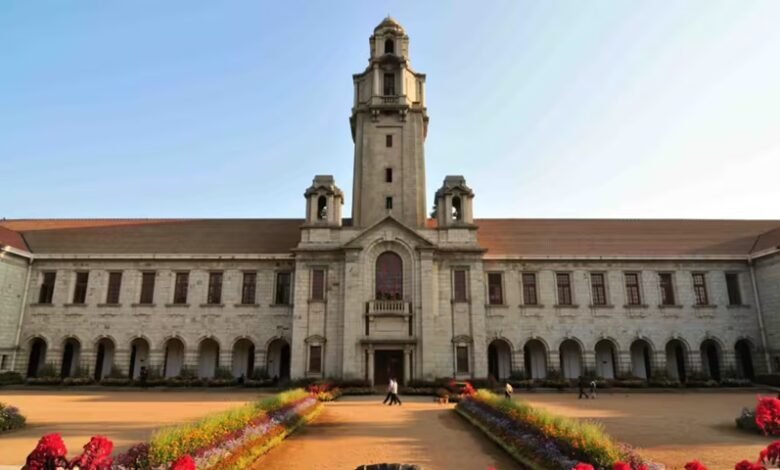
A new working-hours policy at the Indian Institute of Science (IISc) Bengaluru has ignited widespread discontent among students and researchers, who have described it as “oppressive” and “surveillance-oriented.” The rule, implemented by the Department of Electronic Systems Engineering (DESE), mandates that faculty and staff spend at least 40 hours a week on campus, while MTech and first-year PhD students must log a minimum of 50 hours weekly. Senior PhD scholars, however, face even higher expectations—some being asked to match their supervisors’ schedules, which could stretch to 70–80 hours a week.
Under the revised system, access to research facilities such as the National Nanofabrication Centre and the Advanced Microscopy Facility will require official time-logging. Even remote work must be formally approved in writing, a move that students say has created a culture of constant monitoring. “It feels like a surveillance system,” one student told. “When every hour must be accounted for, rest becomes guilt,” another added, voicing concerns about mental health and burnout.
The administration has defended the rule, calling it a measure to promote accountability, discipline, and transparency across departments. Officials argue that the policy will standardize working practices and ensure fair usage of institutional resources. However, many in the academic community believe the decision could damage IISc’s long-standing research culture, which has traditionally valued intellectual freedom and flexibility over rigid schedules.
Critics warn that measuring research productivity by logged hours rather than academic output risks undermining creativity and innovation. Faculty members and alumni have also expressed apprehension that such policies could erode trust between supervisors and students, further straining the already demanding research environment.
As protests and discussions continue across the campus, students are urging the administration to revisit the policy and introduce a more flexible, outcome-based approach. The controversy has drawn national attention, with education experts cautioning that IISc’s decision could set a troubling precedent for other premier institutions. The institute, regarded as India’s top research university, now faces mounting pressure to balance accountability with the well-being and autonomy of its scholars.