
Increase in troop deployment, counter-drone strategies and air defense protocols: Ways the Army is safeguarding Amarnath pilgrims following the Pahalgam terror incident.
News Mania Desk / Piyal Chatterjee / 9th July 2025

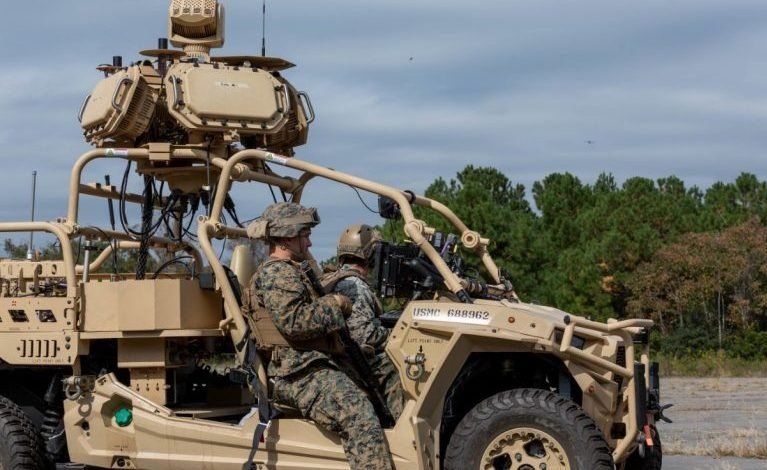
The Amarnath Yatra this year is the most protected since the repeal of Article 370 in August 2019, with a significant rise in troop presence and the implementation of anti-drone and air defence systems, along with other intensified security measures, security sources informed The Indian Express.
The journey was shortened by almost two weeks in 2019 because of security issues. In 2020 and 2021, it was called off because of the COVID-19 pandemic. This year’s comprehensive security measures are a response to the fatal terrorist incident in Pahalgam on April 22. Two weeks later, India initiated Operation Sindoor to dismantle the terrorist infrastructure in Pakistan.
Officials report that the Army has launched various security measures, such as a greater troop presence in elevated areas, heightened patrolling in adjacent valleys, and the installation of anti-drone and air defense systems. Comprehensive surveillance and monitoring protocols are implemented, utilizing satellites, unmanned aerial vehicles (UAVs), and a radar network.
A layered arrangement of security personnel has been set up along both paths leading to the Amarnath shrine. The Army is tasked with securing the boundaries, elevated regions, and places that cannot be accessed by vehicles or on foot. The two pathways to the sacred cave are: the northern pathway through Baltal in Kashmir and the southern pathway through Pahalgam, which is longer and takes more time.
Law enforcement and paramilitary units are stationed in urban areas and located near the paths of the pilgrimage. A total of 581 companies from the Central Armed Police Forces (CAPF) are ready for deployment during the yatra.
Each route is overseen by a single Rashtriya Rifles battalion, with approximately two battalion-sized units stationed along each route. A battalion usually consists of 1,000 to 1,200 soldiers. The Army’s Special Forces and air defense units are positioned at strategic points along the pathways.
Joint control centers, featuring staff from the Army, police, paramilitary units, and civil administration, have been established along every route to guarantee coordination and facilitate rapid responses to emergencies.
“No-fly zones for aircraft and drones have already been enforced. All approaches to the yatra routes and nearby valleys are under constant surveillance,” an official said.
“There is frequent patrolling by troops, and multi-tiered security checks are conducted on all individuals,” the official added, noting that there are restrictions on carrying certain equipment, including small drones. “Along the vehicle routes, strict schedules are enforced for yatra convoys and civilian traffic to avoid any overlap,” the official said.
The yatra started on July 3 and is set to last until August 9. Over 1 lakh pilgrims have visited the Amarnath cave shrine during the first six days of this year’s pilgrimage, stated Jammu and Kashmir Lieutenant Governor Manoj Sinha on Tuesday.