India-Pakistan Ties Still Pose Nuclear Risk: US Intelligence Report
News Mania Desk / Piyal Chatterjee/ 19th March 2026

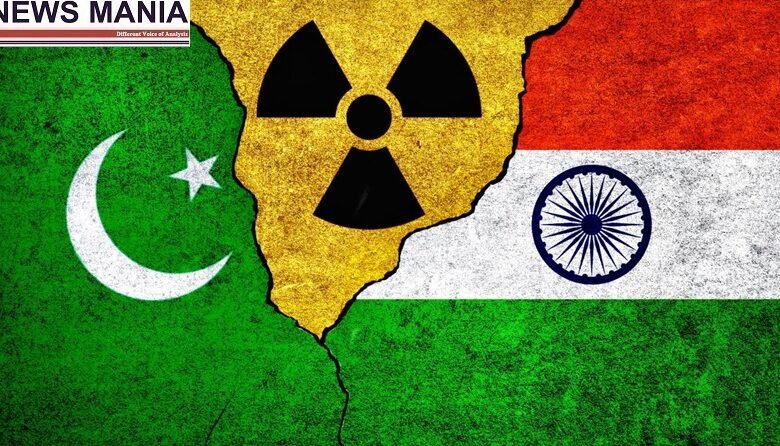
Relations between India and Pakistan continue to carry the risk of escalating into a potential nuclear conflict, according to the latest annual threat assessment released by the US Intelligence Community.
The report, presented before the US Senate, highlights that while both nuclear-armed neighbours do not intend to engage in a full-scale war, underlying conditions remain fragile and capable of triggering serious crises. It points out that the history of military confrontations between the two countries, combined with unresolved tensions, keeps the possibility of escalation alive.
A key concern flagged in the assessment is the role of non-state actors and terrorist groups, which could act as catalysts for conflict. The report notes that such elements have the potential to provoke incidents that may rapidly spiral into larger confrontations between the two nations. It specifically refers to recent attacks, including one near Pahalgam in Jammu and Kashmir, as examples of how localised violence can heighten bilateral tensions and increase the risk of escalation.
Despite these risks, the US intelligence agencies assess that neither India nor Pakistan is currently seeking open conflict. Diplomatic interventions in the past have helped defuse tensions, preventing situations from deteriorating further. However, the report cautions that the absence of direct intent does not eliminate the danger, as miscalculations or sudden provocations could still lead to unintended consequences.
The assessment also places the India-Pakistan dynamic within the broader security landscape of South Asia, where instability in neighbouring regions continues to pose additional challenges. Militant groups operating across borders and evolving geopolitical alignments further complicate the situation, making the region one of the most sensitive nuclear flashpoints in the world.
The findings underscore the importance of sustained diplomatic engagement, crisis management mechanisms, and counter-terrorism efforts to prevent escalation. As both countries maintain significant nuclear capabilities, even limited confrontations carry the risk of severe global consequences.
Overall, the report reiterates long-standing international concerns that the India-Pakistan rivalry, rooted in decades of conflict and mistrust, remains a critical factor in global security calculations, with the potential to escalate into a nuclear crisis if not carefully managed.