Iran experiences widespread unrest as the Khamenei administration struggles with its legitimacy.
News Mania Desk /Piyal Chatterjee//9th January 2026

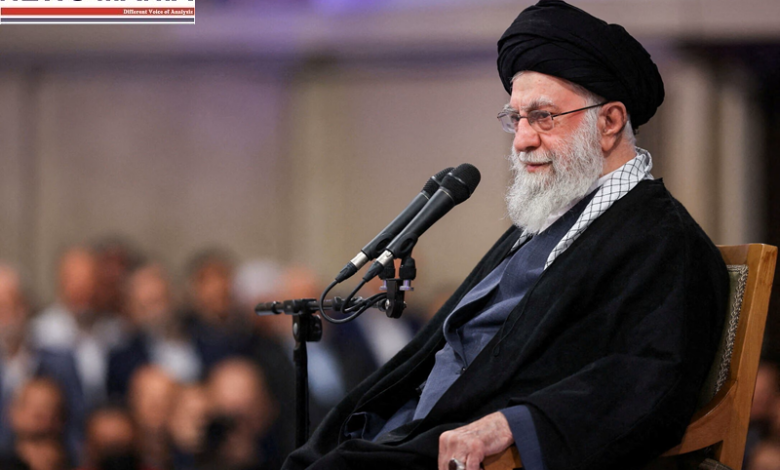
The religious leadership in Iran doesn’t seem to be able to address the problem of legitimacy at the center of the Islamic Republic at this time, as the country’s anti-government unrest is changing quickly and foreign pressure is increasing.
All 31 of Iran’s provinces have seen protests since they started in Tehran last month, although they have not yet reached the magnitude of the upheaval that occurred in 2022–2023 after Mahsa Amini was killed while being held for allegedly breaking Islamic dress standards. The most recent protests, which began in Tehran with Grand Bazaar businessmen enraged by a rapid decline in the value of the rial, now involve others, primarily young males rather than the ladies and girls who were instrumental in the Amini demonstrations.
At least 34 protestors and four security personnel were killed during the violence, according to the US-based Human Rights Activists News Agency (HRANA), and 2,200 people were arrested. According to commentators, this indicates a deeper disenchantment with the Shi’ite status quo. While responding to certain protesters with tear gas amid violent street clashes, authorities have attempted to maintain a dual approach to the turmoil, claiming that economic concerns are legitimate and would be dealt with dialogue.
“I just want to live a peaceful, normal life Instead, they (the rulers) insist on a nuclear program, supporting armed groups in the region, and maintaining hostility toward the United States,” Mina, 25, told by phone from Kuhdasht in the western Lorestan province.
“Those policies may have made sense in 1979, but not today. The world has changed,” said the jobless university graduate.
The Islamic Republic’s fundamental ideological tenets, from enforced clothing regulations to foreign policy decisions, did not resonate with people under 30, who make up about half of the population, according to a former senior official from the establishment’s reformist wing. Selective enforcement of the hijab, which was a focal topic of the Amini protests, is currently taking place. In contrast to a custom that has long characterized the Islamic Republic, many Iranian women now publicly refuse to wear it in public.
In the ongoing protests, many protesters are venting anger over Tehran’s support for militants in the region, chanting slogans such as “Not Gaza, not Lebanon, my life for Iran,” signalling frustration at the establishment’s priorities.
Israel’s attacks against Iranian proxies, including Hamas in Gaza, Hezbollah in Lebanon, the Houthis in Yemen, and militias in Iraq, as well as the overthrow of Iran’s close friend, Syrian dictator Bashar al-Assad, have diminished Tehran’s influence in the area.
In a video posted on X and confirmed by Reuters, demonstrators in Mashhad, the northeastern city with the second-highest population, were seen tearing up a giant Iranian flag after dragging it down from a pole.
Other footage authenticated by Reuters this week showed protestors marching through Abdanan, a city in southwest Ilam province, and people fighting with security personnel in Tehran’s Grand Bazaar.