Iranian Shahed Drones Pose Growing Challenge to US Air Defence Systems
News Mania Desk / Piyal Chatterjee/ 5th March 2026
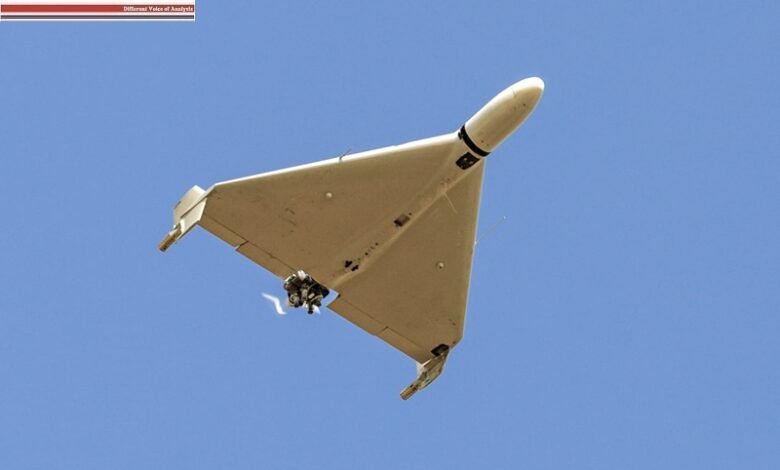
Iran’s deployment of Shahed-series drones has emerged as a major concern for the United States and its allies, with defence experts warning that the relatively inexpensive unmanned aircraft are exposing vulnerabilities in advanced air defence systems. The increasing use of these drones in ongoing regional tensions has demonstrated how low-cost technology can challenge some of the world’s most sophisticated military networks.
In recent weeks, Iran has intensified its use of drones as part of its response to escalating hostilities in the Middle East. Several waves of drone and missile strikes have targeted military installations and strategic infrastructure linked to US forces and allied nations across the region. While many of these threats have been intercepted, analysts say the scale and persistence of the attacks are putting pressure on existing defence mechanisms.
At the centre of this strategy are the Shahed-136 and its upgraded variants, commonly described as “kamikaze drones.” These unmanned aircraft are designed to loiter in the air before diving into their targets with explosive payloads. Their relatively simple design and low production cost make them ideal for large-scale deployment, allowing Iran to launch swarms intended to overwhelm defensive systems.
One of the biggest challenges posed by these drones is their ability to evade detection. Flying at relatively low altitudes and slower speeds, Shahed drones often operate below the range where conventional radar systems are most effective. Their small radar signature further complicates detection, leaving defence operators with limited time to respond once the drones are identified.
Military analysts note that the threat lies not only in the individual drone’s capabilities but also in the strategy behind their use. Iran’s ability to launch multiple drones simultaneously creates a “saturation attack” scenario, where even advanced air defence systems may struggle to intercept every incoming target. In such situations, a few drones slipping through defensive layers can still cause damage to critical infrastructure.
Another major concern is the cost imbalance between offensive and defensive systems. Many Western air defence platforms rely on interceptor missiles that are significantly more expensive than the drones they are designed to destroy. This raises questions about sustainability in prolonged conflicts, as repeatedly using high-value interceptors against low-cost drones could strain defence resources.
Despite successful interceptions by US and allied forces in several incidents, experts warn that Iran’s expanding drone production capacity could allow it to maintain a steady supply of these weapons. If deployed in large numbers over an extended period, such drones could continue to test the resilience of air defence systems across the region. The evolving situation has prompted renewed discussions among military planners about the need for more cost-effective counter-drone technologies. Directed-energy weapons, electronic warfare tools and specialised anti-drone systems are increasingly being explored as alternatives to traditional missile-based defences.