JD Vance Faces Backlash Over Remarks on Hindu Wife’s Faith
News Mania Desk / Piyal Chatterjee / 1st November 2025

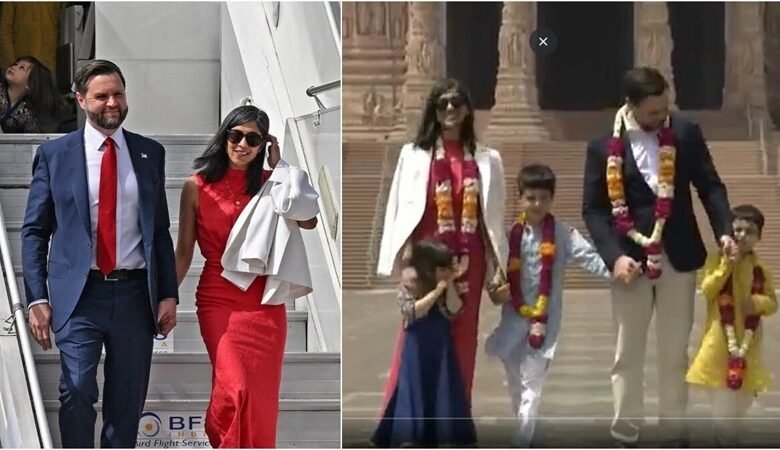
US Vice President JD Vance has sparked controversy after saying he hopes his wife, Usha Vance—who was raised Hindu—will one day embrace Christianity. His remarks, made at a conservative youth event hosted by Turning Point USA, have drawn criticism from Indian Americans, interfaith advocates, and political observers, who accuse him of being insensitive toward his wife’s religious identity.
Responding to a question about how faith works in their inter-religious marriage, Vance told the audience that while his wife often accompanies him to church, he hopes she might “eventually be moved by the same things that moved” him to Christianity. He added that even if she does not convert, “God gives everyone free will.” The statement quickly spread online, igniting debate about cultural and religious tolerance in America’s political landscape.
Usha Vance, born Usha Chilukuri to Indian immigrant parents, has spoken openly about her Hindu upbringing and credited her parents’ faith for shaping her values. Although she is not a practising Christian, the couple’s three children are being raised in the Christian faith. Usha has reportedly maintained respect for both traditions, avoiding public religious commentary.
Critics, however, accused JD Vance of using his wife’s religion to appeal to his conservative base, particularly among evangelical Christians. Former Indian diplomat Kanwal Sibal and several Hindu advocacy groups denounced his comments as “Hinduphobic” and culturally dismissive. Social-media users argued that the vice president’s remarks reflected a narrow understanding of inter-faith harmony and could alienate minority communities in the United States.
Defenders of Vance said his comments were taken out of context, insisting he was expressing a personal hope rather than making a political or religious demand. Supporters also pointed out that interfaith couples often navigate such conversations privately, and Vance’s statement was consistent with his devout Christian beliefs.
The controversy comes as Vance’s political profile continues to rise within the Republican Party. Seen as a potential 2028 presidential contender, the incident has reignited discussions about religion in American politics and the fine line between personal conviction and public representation.
While Vance has not issued an official clarification, the episode underscores the cultural complexities of interfaith relationships—and how they can become political flashpoints in an increasingly divided America.