
Low Visibility, Safety Lapses Flagged in Preliminary Report on Ajit Pawar Plane Crash
News Mania Desk/ Piyal Chatterjee/ 28th February 2026
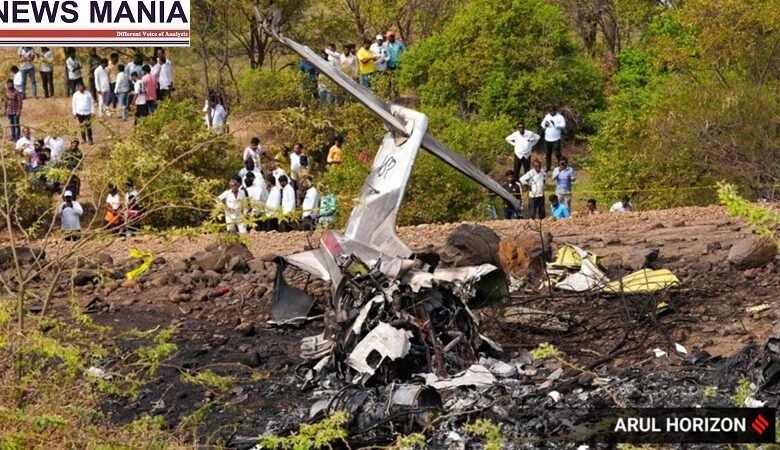
A preliminary investigation into the fatal plane crash that claimed the life of senior leader Ajit Pawar has revealed multiple safety concerns, including poor visibility and infrastructure gaps at Baramati airfield. The Aircraft Accident Investigation Bureau (AAIB) has outlined key findings that point to operational and environmental challenges during the aircraft’s final approach.
The Learjet 45 was attempting to land at Baramati on January 28 when weather conditions were reportedly below the prescribed minimum for safe operations. Visibility at the time was estimated to be around three kilometres, significantly lower than the five kilometres required under Visual Flight Rules (VFR) at an uncontrolled airfield. Investigators noted that the airstrip lacks advanced landing aids and a certified air traffic control system, which could have compounded the risks during adverse weather.
According to the report, visibility assessments were made visually by personnel at the ground rather than through a formal meteorological observation system, as the facility does not have dedicated weather monitoring equipment. Despite the sub-optimal conditions, landing clearance was granted. Shortly after touchdown, the aircraft is believed to have veered off course and struck obstacles beyond the runway, resulting in the crash.
The probe also flagged concerns about runway maintenance. Markings were found to be faded, and loose gravel was reportedly present on the surface, potentially affecting braking efficiency and aircraft handling. Additionally, the control tower was manned by a ground instructor rather than a fully certified air traffic controller on the day of the incident.
Flight data has been successfully retrieved and is under detailed analysis. However, the cockpit voice recorder sustained thermal damage and has been sent abroad for specialised recovery procedures. Investigators are continuing to examine technical, human, and environmental factors before issuing a final report. In the interim, aviation authorities have initiated safety reviews and inspections to ensure stricter compliance with operational norms at smaller airfields, aiming to prevent similar tragedies in the future.