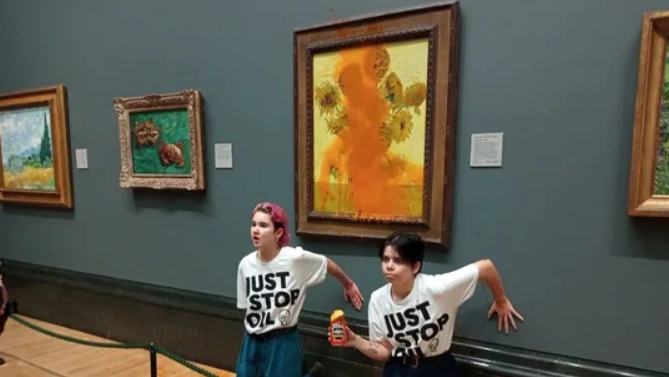
The well-known Sunflowers painting by Vincent van Gogh at the National Gallery in London was covered in soup. One of the most well-known paintings, the image highlights the beauty of commonplace items like a flower, a chair, and a shoe. One of the series was sold in 1987 for $39 million.
Two teenage fans who were wearing Just Stop Oil t-shirts splashed the liquid over the glass-protected mural on October 14 afternoon. They later posted the video on their Twitter timeline with the statement, “Human creativity and brilliance are on display in this gallery, yet our heritage is being destroyed by our Government’s failure to act on the climate and cost of living crises.” They are a protest group against global warming.
Two young girls are shown in the film throwing soup at a painting, taking off their jackets to reveal Just Stop Oil t-shirts, and then leaving their fingerprints on the gallery wall.
Phoebe Plummer, 21, of London, one of the protestors, asked, “What is worth more, art or life?” Newcastle native Anna Holland, age 20, was with her. Is it more valuable than food? Beyond justice? Is the preservation of an artwork or the preservation of our world and its inhabitants more important to you?
“When civil society is on the verge of disintegrating, what purpose is art? If they wish to live in a world where there are still people around to appreciate art, the art establishment, artists, and the general public must join forces in civil resistance “the Twitter handle for the group.
The gallery representatives stated that there has been no damage to the painting. The chamber was swiftly emptied of guests, and police were contacted, according to a statement made by National Gallery staff. The frame has some minor damage, but the artwork is undamaged.
Later, a different activist from the same organization sprayed paint on the signboard of the London Met police headquarters. The demonstrator demanded the freedom of her fellow campaigners. Five supporters of Just Stop Oil are now being held in jail either on remand or serving time for their actions to demand that the government stop issuing new oil and gas licenses.
“New oil and gas will cause agricultural failure, food shortages, and the breakdown of law and order,” the group asserts. The state of human civilization as we know it is in danger of disintegrating.
The group has been holding sit-down demonstrations on highways in central London for the previous two weeks, angering commuters and drivers. However, October 17 move seemed to be an escalation of its strategies.
News Mania Desk