Rastriya Swatantra Party Leads Early Trends in Nepal Elections as Counting Continues
News Mania Desk / Piyal Chatterjee/ 6th March 2026
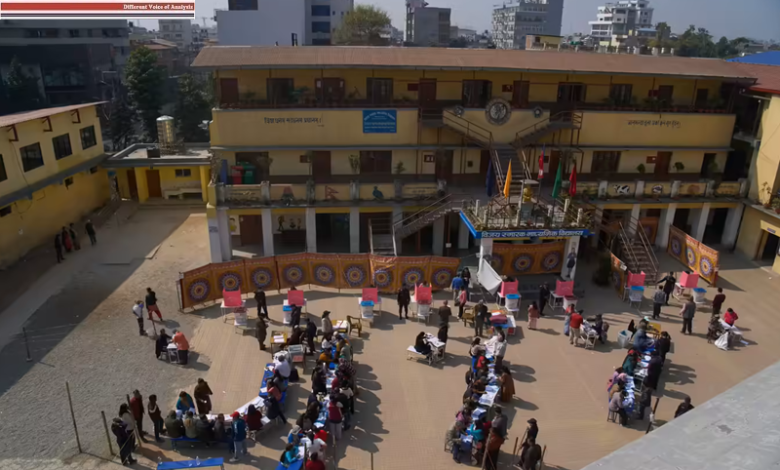
Vote counting is underway in Nepal’s parliamentary elections, with early trends indicating a strong performance by the Rastriya Swatantra Party led by Balen Shah. Initial results suggest the relatively new political force is emerging as a major contender, potentially reshaping the country’s long-standing political order.
The election, held to choose representatives for Nepal’s 275-member House of Representatives, is being closely watched both domestically and internationally. Of the total seats, 165 members are elected directly through first-past-the-post contests in individual constituencies, while the remaining 110 seats will be filled through a proportional representation system based on each party’s overall vote share.
As ballots continue to be counted across the country, early figures show the Rastriya Swatantra Party leading in a significant number of constituencies. The strong showing has placed the party ahead of traditional political players that have dominated Nepal’s politics for decades. Among those trailing in early trends are the Nepali Congress and the Communist Party of Nepal (Unified Marxist–Leninist), led by former prime minister K. P. Sharma Oli. The Communist Party of Nepal (Maoist Centre), headed by former prime minister Pushpa Kamal Dahal, is also facing tough competition in several constituencies as the vote count progresses.
In one of the most closely watched races, Balen Shah himself is leading in his constituency against K. P. Sharma Oli, according to preliminary results. If confirmed, the outcome would represent a major political upset, highlighting the growing support for newer political alternatives in Nepal. The election comes at a crucial time for the Himalayan nation. It follows months of political turbulence and widespread public dissatisfaction with the country’s established leadership. Large protests led by young people and civil society groups last year demanded sweeping political reforms and greater accountability from the government.
Balen Shah, who first gained national attention after winning the mayoral election in Kathmandu, has positioned himself as a reform-oriented leader seeking to challenge traditional political structures. His party’s campaign has focused on issues such as transparency, anti-corruption measures, economic opportunities for youth and improvements in governance.
These themes have resonated strongly with many voters, particularly younger citizens who have increasingly expressed frustration with repeated political instability and slow economic progress in Nepal. If the current trends continue, the election could mark a significant turning point in Nepal’s political history, signaling a shift away from traditional power centers toward emerging political movements driven by a new generation of leaders and voters.