
Sam Altman Acknowledges Google’s Temporary Lead in AI, Says OpenAI Will Soon Regain Momentum
News Mania Desk / Piyal Bhattacharjee / 24th November 2025

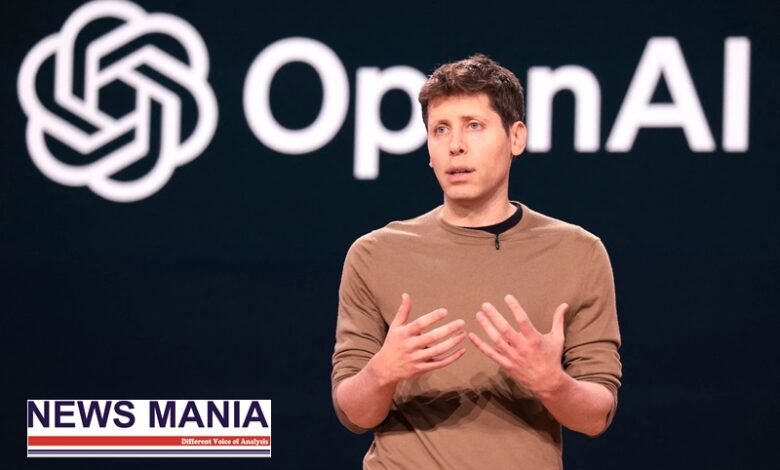
OpenAI CEO Sam Altman has reportedly admitted in an internal memo that Google is currently ahead in the artificial intelligence race, particularly after the launch of its advanced Gemini 3 model. However, Altman emphasized that this lead is only temporary and that OpenAI is already working aggressively to close the gap. His message, which has surfaced through recent reports, reveals both a realistic assessment of the competitive landscape and a strong confidence in OpenAI’s long-term strategy.
In the memo, Altman notes that Google’s Gemini 3 has gained widespread attention among developers for its strengths in tasks such as automated website creation, product prototyping, and code generation—domains where OpenAI previously held a strong advantage. Google’s ability to deeply integrate its AI systems across Search, Workspace apps, Android, and creative tools has also given it a significant visibility boost in the market.
Altman reassures his team that OpenAI has built a robust foundation capable of withstanding temporary setbacks, even as competitors release strong models. He reiterates that the company’s primary mission—advancing toward artificial superintelligence—remains intact. He also highlights that substantial portions of OpenAI’s research resources continue to focus on frontier work that aims to surpass current AI capabilities.
Importantly, Altman points out that Google is not the only company making rapid progress. He mentions Anthropic and its Claude models, which have demonstrated notable improvements, especially in coding-related tasks.
Despite the competitive pressure, Altman maintains an optimistic tone about OpenAI’s financial health, noting that the company is still on track to generate around $13 billion in revenue this year. He emphasizes that OpenAI’s advantage lies not only in building powerful models but also in establishing a long-term ecosystem, advancing research, and prioritizing breakthroughs that push AI toward superintelligence.