Storm Over the Middle East: How the US-Israel-Iran War is Redrawing Global Geopolitics
Ms. Bornali Biswas-Editor in Chief

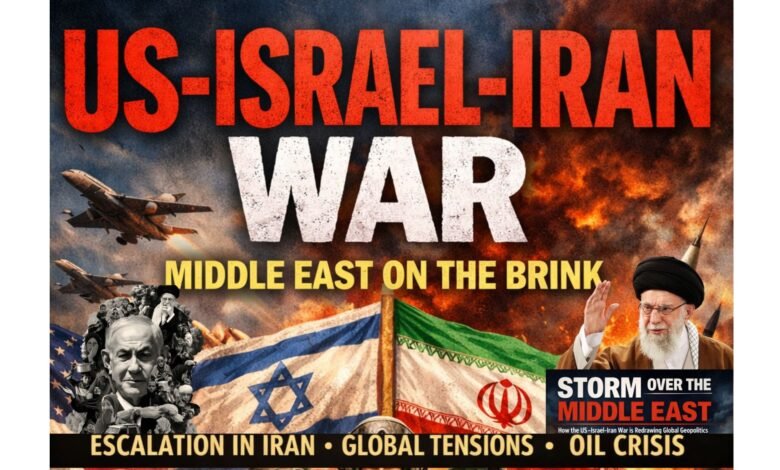
The Middle East has once again become the epicenter of a military and geopolitical storm. A week-long escalation, marked by Israeli airstrikes on Iranian cities and coordinated actions by the United States, has thrust the region into unprecedented volatility. The conflict, triggered by the recent assassination of Iran’s Supreme Leader Ayatollah Ali Khamenei, has exposed long-standing strategic rivalries, deep-seated political grievances, and the fragility of regional security.
Origins of the Conflict
Tensions between Iran, Israel, and the United States have been simmering for decades, rooted in ideological, territorial, and security disputes. Israel has consistently cited Iran’s nuclear ambitions, ballistic missile program, and support for proxy groups in Lebanon, Syria, and Gaza as existential threats. The US, in turn, has maintained a military and diplomatic stance aimed at containing Iran’s regional influence, including sanctions and strategic deployments.
The immediate spark came with a highly coordinated operation that killed Khamenei. Iran’s leadership vacuum intensified fears of chaos within Tehran, prompting Israel and US forces to launch precision strikes targeting Iran’s military infrastructure, intelligence facilities, and sites associated with the Assembly of Experts, which oversees succession of the Supreme Leader.
Strategic Objectives
For Israel, the campaign serves multiple purposes:
- Decapitation of Command: By targeting security headquarters and leadership-linked facilities, Israel seeks to disrupt Iran’s ability to coordinate retaliation.
- Deterrence: Demonstrating military reach sends a strong message to both Iran and its regional allies, signaling that any aggression will be met decisively.
- Regional Rebalancing: Weakening Iran’s command structure allows Israel to solidify its influence in the Gulf and counter Iranian proxy activities.
The United States, aligned with Israel, is leveraging its military capabilities to achieve broader objectives:
- Neutralize Iran’s missile and drone networks that threaten US bases and allies.
- Ensure maritime security in the Gulf and Strait of Hormuz, vital for global oil shipments.
- Reinforce deterrence credibility among allies in the region and globally.
For Iran, the stakes are existential. Retaliatory capacity, survival of the regime, and safeguarding of ideological influence across the Middle East define Tehran’s strategy. Iranian forces have already engaged in missile strikes on strategic locations and may seek to escalate asymmetric warfare through proxies, cyberattacks, and threats to international shipping lanes.
Regional and Global Implications
The conflict is rapidly transcending the Middle East. Global markets, particularly energy and commodity prices, have reacted sharply. Iran controls critical oil and gas export routes, and any disruption threatens to escalate fuel prices worldwide.
Diplomatically, the war tests alliances. NATO partners, China, and Russia are observing closely, weighing economic and strategic interests. The involvement of US forces means that any miscalculation could risk drawing multiple powers into a wider confrontation.
Humanitarian concerns are also mounting. Tehran and other urban centers are experiencing civilian shocks from airstrikes. Refugee flows, already strained by prior regional conflicts, may intensify, creating cross-border crises in Turkey, Iraq, and the Gulf states.
Possible Outcomes
- Prolonged Conflict: If Iran retaliates through conventional or asymmetric means, the war could extend across months, destabilizing the entire Middle East.
- Leadership Realignment in Iran: The succession process for the Supreme Leader could accelerate, potentially placing a more hardline or pragmatically oriented figure in charge. This shift will influence regional diplomacy and negotiations on nuclear and military programs.
- Global Economic Strain: Prolonged instability could push energy prices higher, disrupt shipping routes, and trigger inflationary pressures globally.
- Diplomatic Pressure and Mediation: International actors may intensify diplomatic interventions to contain escalation, with the UN and neutral nations attempting to broker ceasefires or de-escalation agreements.
Strategic Lessons and Long-Term Impact
The current crisis underscores the centrality of asymmetric warfare in modern geopolitics. Drones, cyberattacks, and targeted airstrikes complement conventional military power, shifting the balance of influence in high-stakes conflicts.
It also highlights the vulnerability of globalized energy markets to regional instability. Any disruption in Iran or the Gulf directly reverberates worldwide, affecting everything from fuel prices to supply chains.
Finally, the war is reshaping alliances. Israel and the US are reaffirming their partnership, while countries like China, Russia, and Turkey are positioning themselves as potential mediators or strategic hedgers. How these alliances solidify could define Middle Eastern and global geopolitics for decades.
Conclusion
The US–Israel–Iran conflict is more than a regional confrontation; it is a test of global strategic resilience. With leadership uncertainties in Tehran, high-tech military engagements, and the world watching closely, the Middle East has entered a new era of volatility. The outcomes will not only determine the fate of regional powers but will also leave lasting imprints on global markets, security architecture, and diplomatic dynamics.