Supreme Court Allows Withdrawal of Life Support for Man in Vegetative State, Permits Passive Euthanasia
News Mania Desk/ Piyal Chatterjee/ 11th March 2026

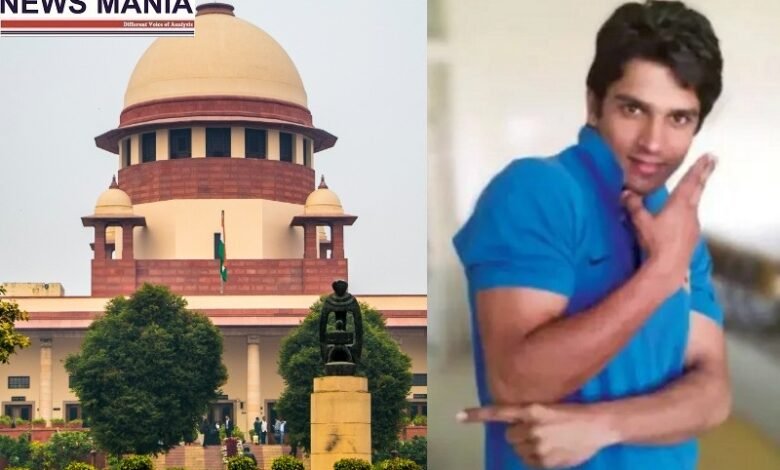
In a significant ruling on end-of-life care, the Supreme Court of India has permitted the withdrawal of life-support treatment for a man who has remained in a permanent vegetative state for more than a decade, allowing passive euthanasia under strict medical supervision.
The case involved Harish Rana, a man from Ghaziabad who suffered severe brain injuries after a fall in 2013. Since the accident, he had been in a persistent vegetative state and depended entirely on life-sustaining medical support. With no signs of recovery over the years, his parents approached the apex court seeking permission to withdraw life support, stating that continued treatment was only prolonging his suffering and there was no realistic chance of improvement.
A Bench led by Justice J.B. Pardiwala considered the plea after examining detailed medical evaluations and expert opinions. The reports confirmed that the patient’s condition was irreversible and that there had been no meaningful neurological recovery since the incident. After reviewing the circumstances, the court allowed the family’s request and permitted the withdrawal of life-sustaining treatment.
The court also directed that Rana be admitted to All India Institute of Medical Sciences in New Delhi, where the procedure for withdrawing life support will be carried out under the supervision of a specialised medical team. The hospital has been instructed to ensure that the process follows established medical and ethical protocols.
During the hearing, the Bench reflected on the complex moral and philosophical issues associated with the right to die with dignity. Justice Pardiwala referred to the famous Shakespearean line “To be or not to be,” noting that cases involving terminal illness and irreversible conditions raise profound ethical questions about life, suffering and human dignity. Passive euthanasia involves withdrawing or withholding medical treatment that artificially sustains life, allowing a person to die naturally from the underlying medical condition. It is distinct from active euthanasia, which involves deliberately administering substances to cause death and remains illegal in India.
The court’s decision draws on the legal framework established in the landmark 2018 judgment in Common Cause v. Union of India, where the Supreme Court recognised the right to die with dignity as part of the fundamental right to life under Article 21 of the Constitution. That ruling also laid down guidelines permitting passive euthanasia in certain circumstances, subject to strict safeguards and medical review.