Supreme Court Flags ‘Irresponsible Freebies’, Warns of Impact on Development
News Mania Desk /Piyal Chatterjee/ 19th February 2026
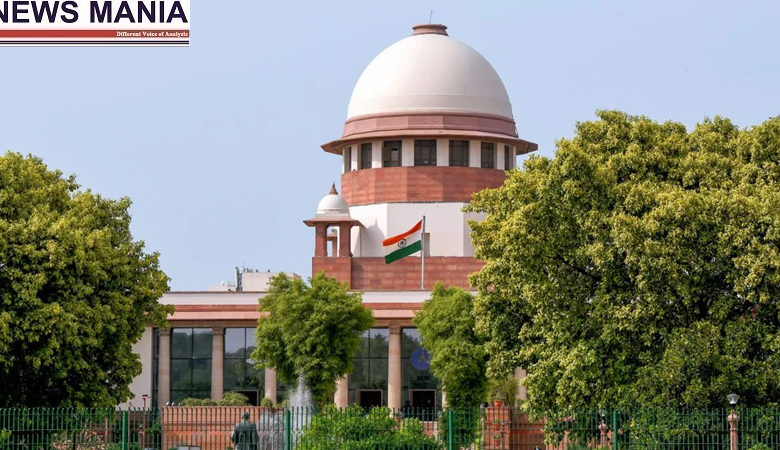
The Supreme Court on Thursday expressed serious concern over what it described as the growing culture of “irresponsible freebies” announced by state governments, cautioning that such measures could adversely affect long-term development and fiscal discipline.
The observations came during the hearing of a case related to electricity subsidies, where the court examined the financial implications of large-scale welfare announcements. A bench of the Supreme Court of India questioned whether states had adequately assessed the economic impact before rolling out sweeping subsidy schemes.
The matter arose in connection with a challenge involving the Tamil Nadu Power Distribution Corporation Ltd and provisions under the Electricity Amendment Rules, 2024. The issue centred on a state decision to extend free electricity benefits broadly, raising concerns about how such schemes would be funded and implemented.
During the proceedings, the bench noted that several states are already grappling with significant revenue deficits, yet continue to announce expansive welfare measures without clear financial roadmaps. The court observed that development priorities such as infrastructure, healthcare and employment generation could suffer if public funds are diverted to sustain unplanned subsidies.
Judges also highlighted the administrative challenges created by sudden policy announcements. They pointed out that distribution companies and regulatory authorities require sufficient lead time to adjust tariffs and budget allocations. Abrupt decisions, the court remarked, may introduce uncertainty and disrupt financial planning within essential service sectors. While acknowledging that targeted welfare for economically vulnerable sections is necessary, the bench questioned the rationale behind universal benefits that extend to those capable of paying for services. The court underscored that indiscriminate subsidies ultimately place a burden on taxpayers and could undermine fiscal sustainability.
The judges further cautioned that excessive reliance on free benefits may have broader social implications, including potential effects on work incentives and productivity. They urged policymakers to balance social welfare objectives with responsible economic governance.
Although no immediate stay was granted on the scheme under discussion, the court’s remarks signalled heightened judicial scrutiny of large-scale freebie policies. The case has reignited debate over the fine line between welfare support and populist spending, with broader implications for how states design and finance public assistance programmes in the years ahead.