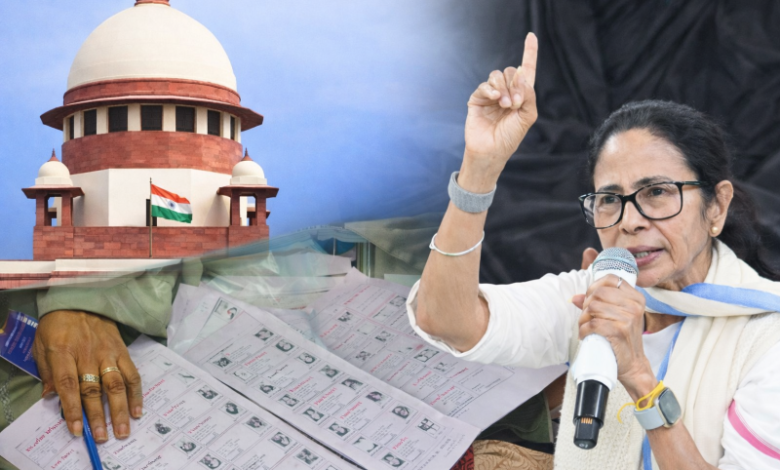
The Supreme Court has made it clear that the Special Intensive Revision (SIR) of electoral rolls must proceed without obstruction, warning that no state government should create impediments to the process. The strong observation came during a hearing on the Election Commission of India’s (ECI) response to a petition filed by West Bengal Chief Minister Mamata Banerjee challenging the SIR exercise in the state.
A bench comprising Chief Justice Surya Kant, Justice Joymalya Bagchi and Justice Vipul M. Pancholi stressed that the court would issue any necessary clarifications or directions but would not permit disruption of the revision exercise. The bench also extended the deadline for completion of the SIR process in West Bengal by one week beyond the earlier cut-off of February 14 to facilitate compliance and coordination.
The dispute centers on the ECI’s ongoing Special Intensive Revision, a focused verification drive aimed at updating and correcting electoral rolls by removing ineligible or duplicate entries and ensuring that eligible voters are properly included. The exercise requires logistical support and manpower from state authorities, including the deployment of officers and field-level staff.
During the hearing, the court questioned the West Bengal government over the delay in providing names of more than 8,000 Group-B officers that could be deployed for the exercise. The bench also raised concerns about the timing of official communications sent after earlier court directions, indicating that timely cooperation is essential in a time-bound electoral process.
The Election Commission informed the court that it had written multiple letters to the state government specifying its manpower requirements but did not receive adequate officer details within the expected timeframe. According to the poll body, this lack of response led it to deploy micro-observers to ensure the integrity and continuity of the revision work. The Commission maintained that such deployment falls within its constitutional authority to safeguard the electoral process.
Appearing for the West Bengal government, senior counsel disputed the Commission’s version and argued that the requested officers’ details had been compiled and shared. Counsel representing the Chief Minister told the bench that the state had objected to the manner of micro-observer deployment and had raised concerns about the process design.
Court records noted that during an earlier hearing, the Chief Minister had indicated willingness to provide competent state officers for SIR duties. Subsequent communication from the state indicated readiness to supply over 8,500 officers for the exercise.
The Supreme Court’s intervention underscores the constitutional status of the Election Commission and the importance of accurate electoral rolls to free and fair elections. The matter will continue to be heard as the court examines procedural issues and competing claims regarding compliance and cooperation between the Commission and the state government.