Supreme Court Upholds Election Commission’s Autonomy on Bihar Voter List Revision
News Mania Desk / Piyal Chatterjee / 7th October 2025

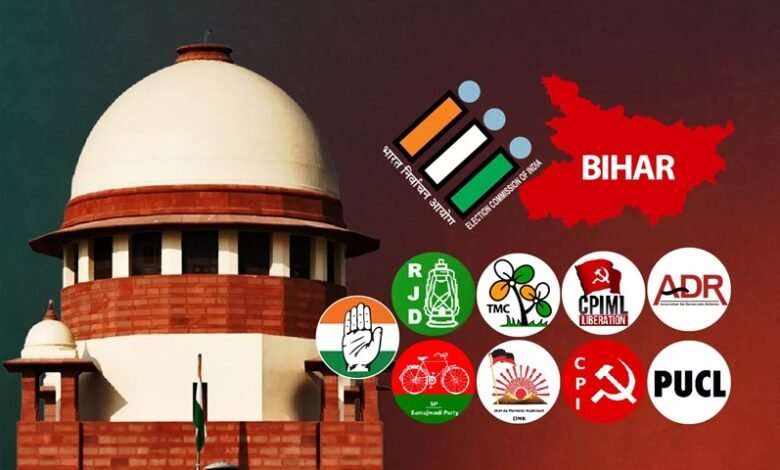
The Supreme Court on Monday reaffirmed that conducting a Special Intensive Revision (SIR) of electoral rolls falls strictly within the Election Commission’s prerogative, and any directive from external authorities would amount to interference in its constitutional domain. The observation came during a hearing concerning the ongoing voter list revision in poll-bound Bihar, where concerns were raised over large-scale deletions of names from the rolls.
A bench led by Justice Sanjiv Khanna emphasized that the Commission’s powers to supervise and control elections must remain independent and insulated from outside influence. The court directed the Election Commission to submit a detailed note by October 9 outlining data related to 3.66 lakh deletions and 21 lakh additions to the electoral rolls after the draft list was published.
Petitioners alleged that numerous voters were removed from the list without prior notice, preventing them from filing appeals. The Election Commission, however, maintained that due procedures were followed, asserting that all deletions were properly notified and that both draft and final electoral rolls had been shared with political parties for scrutiny.
According to official data, 68 lakh names were deleted during the revision exercise, while 21 lakh were re-added during the claims and objections phase. The Court stopped short of intervening directly in the process, stressing that ordering the Commission to undertake or halt revisions would breach its constitutionally protected autonomy.
The ruling reinforces the Election Commission’s independent authority in managing electoral procedures, a cornerstone of India’s democratic framework. Elections in Bihar are scheduled to be held in two phases on November 6 and 11, with counting of votes on November 14. The Court’s stance is expected to set a precedent for future disputes involving electoral roll management and institutional independence.