The first hit in history: How Iran most likely shot down a ‘unkillable’ American fighter jet
News Mania Desk / Piyal Chatterjee/ 20th March 2026

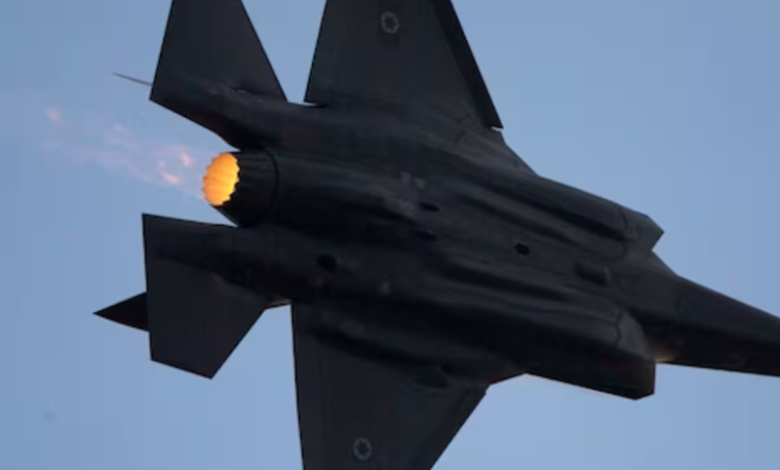
Throughout its entire operational career, the F-35, America’s most sophisticated stealth fighter jet, has never been hit in combat. Until Iran did the unimaginable on March 19. US President Donald Trump claimed that Iran’s air defenses were destroyed, detected, locked on to, and struck an F-35. Iran claimed the aircraft crashed, but the US stated it made an emergency landing at a Middle Eastern base.
According to reports, another F-35 aircraft was struck over Bandar Abbas, Iran. It poses an important query. How could Iran attack one of the most expensive and sophisticated planes in the world with its poor air defenses?
The fact that the US F-35 was flying over central Iran at the time of the strike suggests that American security circles have some faith that Iranian air defenses have been adequately undermined. “Wherever we want, we are flying. On Thursday, Trump said, “Nobody is even shooting at us.” Iran’s air defenses have been “flattened,” according to Defense Secretary Pete Hegseth. The radar-evading F-35 jet was struck a few hours later. Iran twisted the knife by releasing video that captured the precise moment Iranian air defenses tracked and stopped the US jet, which cost more than $100 million, even before the US could make a statement.
According to experts, it was a pivotal point in the conflict that would have global repercussions. The F-35 is now used in about 15 different countries. During Prime Minister Narendra Modi’s visit to the White House last year, Trump also offered the aircraft to India. However, India has not yet shown any interest. Take this into consideration: the F-35 represents the pinnacle of US aerospace capability.
It is the result of a trillion-dollar initiative. However, a “decimated” Iran has now demonstrated that the cutting-edge aircraft has some weaknesses. However, how was a stealth aircraft—which is made especially to avoid radar—hit? According to defense analyst Sandeep Unnithan, the term “stealth technology” is a “misnomer”.
While it is not known what missiles the Iranians used, it was a loitering munition, specifically the 358 anti-aircraft missile, or a short-range surface-to-air missile. A type of loitering drone with an infrared sensor that can target slow-moving aircraft is the 358 missile, also called the SA-67. However, the F-35 is not a jet that moves slowly. Iran had already targeted American MQ-9 Reaper drones with the 358 missile. Iran has also supplied these missiles to the Houthis in Yemen. In fact, since the war began on February 28, the US has reportedly lost over 12 MQ-9 Reaper drones.
On March 19, an F-35 jet was likely detected and struck by a missile utilizing an infrared search and track (IRST) system, highlighting its vulnerability despite being radar-invisible. This incident parallels the 1999 shooting down of the stealth F-117 Nighthawk, which was also targeted by outdated technology. The event raises significant concerns regarding the effectiveness of Iranian air defenses, prompting potential reassessments of U.S. and Israeli military operations in the region, as they may need to adjust their strategies to ensure air superiority and reconsider tactics for deploying advanced aircraft.