To create a nationwide computing grid, Sarvam AI collaborates with Tamil Nadu and Odisha.
News Mania Desk /Piyal Chatterjee/ 9th February 2026
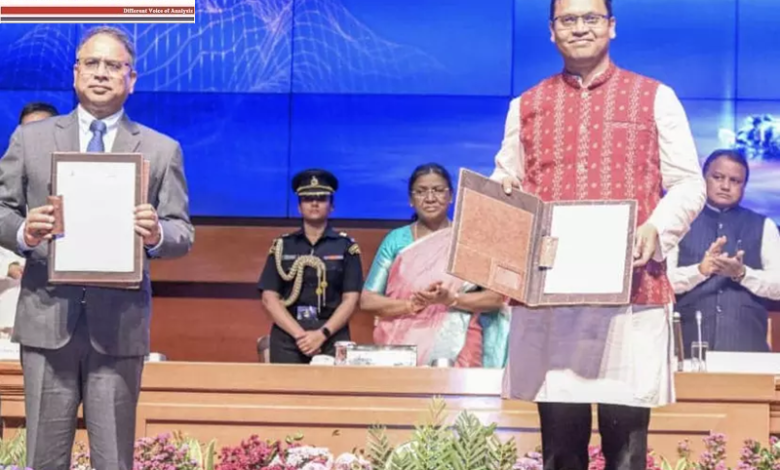
Indian AI firm Sarvam AI has established historic strategic alliances with the state governments of Tamil Nadu and Odisha in a major step towards digital autonomy. In order to ensure that India’s billions of people may benefit from artificial intelligence in their native tongues, the partnerships want to build “Sovereign AI” infrastructure, which includes large-scale computing facilities and localized language models.
These collaborations mark a change in the way Indian states view technology, moving away from a dependence on outside platforms and toward the development of an independent, “full-stack” Indian AI ecosystem as AI evolves from a specialized skill to a fundamental component of public infrastructure.
In a post on X (formerly Twitter) Pratyush Kumar, CEO of Sarvam AI said that “The aim of these partnerships is to drive transformation by building at-scale compute, sovereign models, and the institutional capacity to drive AI adoption”.
The Odisha government and Sarvam AI signed a Memorandum of Understanding (MoU) on February 6, 2026, to build a 50MW AI-optimized facility. Known for its mineral and industrial riches in the past, Odisha is now establishing itself as a major hub for digital intelligence.
There will be two main uses for the new facility:
State Public Utility: Using Vision AI to improve safety in heavy industries and mining, as well as Odia-to-English voice technologies to increase the employability of young people.
National Compute Backbone: The hub will serve as the foundation for a national compute grid, providing additional Indian states and national platforms with production-grade AI capability.
“Sovereign AI”—the notion that a country’s data and the intelligence it produces should stay inside its borders—is the fundamental tenet underlying these actions. Sarvam AI and its state partners are making sure AI takes into account the linguistic and cultural quirks of the Indian populace by creating models especially for Indian languages and settings.