U.S. Military Strike in Eastern Pacific Sinks Suspected Narco-Terror Vessel, Four Killed
News Mania Desk / Piyal Chatterjee /5th December 2025

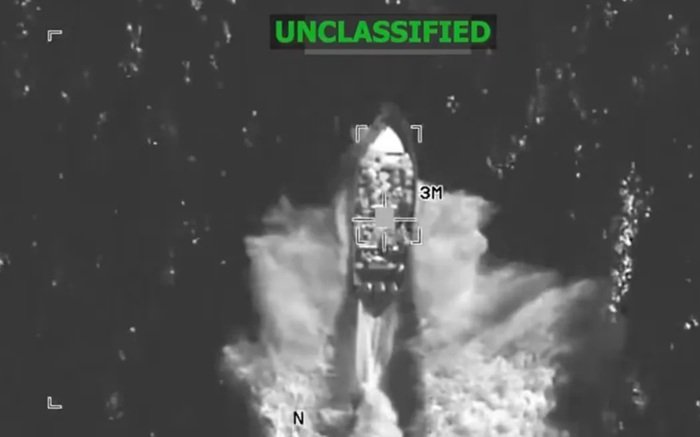
In a fresh escalation of its maritime anti-narcotics campaign, the U.S. military on Thursday struck a vessel in the eastern Pacific Ocean that it identified as a suspected drug-trafficking boat. According to a statement by U.S. Southern Command, the attack targeted a vessel allegedly operated by a “designated terrorist organisation,” resulting in the deaths of four men aboard — described by officials as “narco-terrorists.”
The strike was conducted by the joint force known as Southern Spear, under orders from Defence Secretary Pete Hegseth, following intelligence indicating the boat carried illicit narcotics along a known trafficking route. A video released by the command shows the vessel speeding across open waters before being hit by a missile, confirming its destruction.
This operation now stands as the 22nd such maritime strike by the U.S. since September, part of a broad campaign to dismantle drug-trafficking networks that Washington claims have grown into global narco-terror threats.
The strike comes amid rising legal and ethical scrutiny. Earlier this week lawmakers reviewed classified footage from a prior September operation in which a vessel was first destroyed, then — according to reports — a follow-up strike targeted individuals who had survived and were apparently adrift on wreckage. Critics, including senior congressional figures such as Representative Jim Himes, have expressed alarm, stressing the footage showed “shipwrecked sailors” being attacked while incapacitated — actions some call “among the most troubling” they have witnessed in public service.
Defence supporters argue the victims were not innocent civilians but armed traffickers who remained a threat and could have regrouped or alerted accomplices. Even so, legal experts and human-rights observers have raised serious questions about whether such attacks comply with international law, especially in peacetime and absent a formal declaration of war. The involvement of non-state actors and the potential for civilian casualties complicate the legal justification.
The latest strike has sharpened debate over the U.S. approach to combating drug trafficking via lethal force. On one side, there is support for aggressive disruption of cartels before narcotics reach global markets; on the other, there are growing demands for transparency, oversight, and adherence to wartime conduct standards.
As the tally of maritime strikes rises, so does global attention on the consequences — both intended and collateral — of treating suspected drug operations as wartime targets. With the recounting of yet another fatal strike, the question remains: in the fight against narcotics, does the mission justify expanding the boundaries of military engagement?