US Sanctions on Russian Oil Pose Fresh Challenge for India’s Energy Strategy
News Mania Desk / Piyal Chatterjee / 23rd October 2025

The latest round of US sanctions targeting Russia’s two largest oil producers, Rosneft and Lukoil, has raised new concerns for India, one of Moscow’s biggest energy customers. The measures, aimed at intensifying pressure on Russia over its ongoing war in Ukraine, are expected to have far-reaching implications for global crude trade and India’s energy security.
The sanctions mark Washington’s strongest move yet against Russia’s oil sector, which contributes nearly a quarter of the Kremlin’s federal revenue. With these restrictions, the US seeks to further choke Moscow’s economic capacity to fund its military offensive. However, the fallout extends beyond Russia, particularly to Asian markets like India and China, which have become key buyers of discounted Russian crude since Western nations reduced imports in 2022.
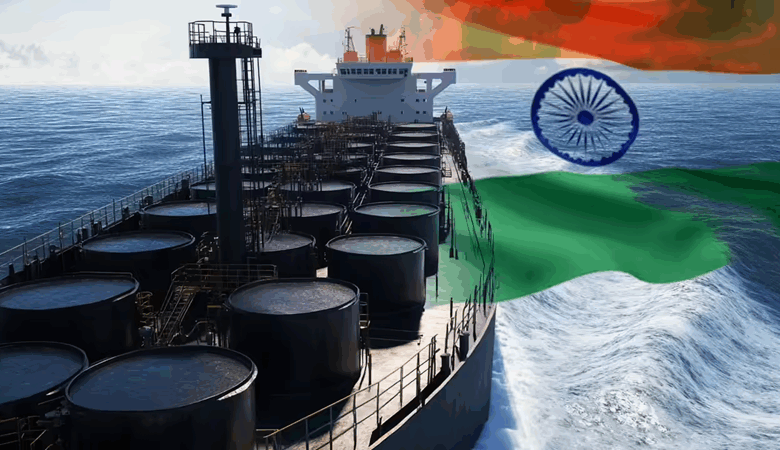
India imported about 1.7 million barrels per day of Russian oil in the first nine months of this year, accounting for roughly 40% of its total crude intake. Following the announcement of sanctions, Indian state refiners — including Indian Oil Corporation, Bharat Petroleum, Hindustan Petroleum, and Mangalore Refinery and Petrochemicals — have begun reviewing their purchase contracts and documentation to ensure compliance. The refiners are verifying that they are not directly sourcing crude from the sanctioned entities.
Russia has dismissed the sanctions, claiming it has developed “immunity” to Western restrictions and arguing that such moves undermine global energy stability. Analysts, however, believe the true impact will depend on how aggressively the US enforces secondary sanctions on intermediaries, banks, traders, and refiners involved in Russian oil transactions.
For India, the situation presents a delicate balancing act. While Russian crude remains an affordable option amid global price volatility, continued purchases could expose Indian firms to compliance risks and diplomatic friction with Washington. A disruption in Russian supply or higher transaction costs could also affect domestic fuel prices and inflation.
Experts suggest that India may diversify imports by increasing purchases from the Middle East and Africa, though such shifts could raise costs. As the geopolitical tug-of-war over energy intensifies, New Delhi faces the challenge of safeguarding its economic interests without straining key global partnerships.