What is the appearance of climate planning driven by the community?
News Mania Desk / Piyal Chatterjee / 29th June 2025

India’s urban areas are becoming hotter and more crowded, with temperatures in smaller towns rising to levels seen in larger cities due to swift urban growth. With increasing heatwaves threatening both lives and livelihoods, heat action plans (HAPs) have become a crucial response at the state, city, and district levels, leading to a rising call for a national action plan. In 2013, Ahmedabad was the first city in India to develop and execute an HAP. Since that time, numerous others have done the same.
In addition to this, there is a growing focus on Heat, Environment, and Sustainable Technology (HEST), as well as a significant demand for scalable cooling solutions. These advancements are encouraging; however, for them to be effective, we must guarantee that these efforts are not only technically viable but also rooted in the needs and actual experiences of those most impacted by climate events—especially individuals residing in informal settlements.
This entails engaging communities in recognizing risks, defining priorities, and collaboratively developing solutions to create more resilient urban areas.
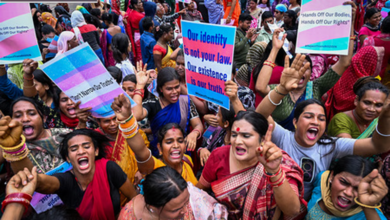
Data from the 2011 census indicates that around 65 million individuals in India reside in informal settlements. Numerous residents are employed in informal, low-wage positions as waste collectors, construction laborers, household workers, and street sellers, facing limited access to shade, rest periods, and drinking water and sanitation services. Heat is not just a source of discomfort; it poses a constant threat to health, hinders productivity, and diminishes income. The effects of increasing temperatures are significantly influenced by gender. Women in the informal sector encounter the challenge of juggling paid employment, often marked by low pay and instability, alongside unpaid caregiving duties. Nonetheless, staying indoors provides scant reprieve, since homes in informal settlements frequently lack adequate ventilation, retaining both heat and humidity.
Informal settlements are often absent from official maps, which reduces their visibility in urban planning and restricts their access to services and infrastructure. Consequently, these communities could also be left out of heat action plans. Intentional measures are crucial to guarantee that adaptation strategies are comprehensive.
Climate resilience necessitates moving away from top-down strategies and adopting methods that are developed in collaboration with the communities themselves. For policymakers, planners, and practitioners, adapting to this change is crucial for creating responses that are inclusive and sustainable.
For many individuals in informal settlements, although climate change may impact their everyday existence, more urgent survival needs usually take precedence. Money lost from missing a day’s work because of intense heat could result in missing a meal that evening. A rise in spending related to heat, particularly in healthcare, worsens this financial strain. Heat, while disruptive, emerges as a quiet danger. The initial step in establishing genuine climate resilience is to grasp what is most important to a community and then synchronize actions with those priorities. For example, in 2021, during research on the effects of air pollution on female construction workers in Delhi, the government declared a compensation of INR 5,000 as relief for COVID-19.
Though community engagement is essential for fostering understanding, agency, and collective action, it constitutes merely one part of the overall effort. The other portion entails collaborating closely with governments to ensure that the solutions created by communities are acknowledged, backed, and expanded.
Based on experience operating from both household and city levels, it is evident that institutional backing is essential for facilitating and maintaining community-driven planning and initiatives.
For example, while the communities we engage with acknowledged the significance of cool roofing, individuals were certain that implementing it widely would need government funding. In numerous communities where we operate, the typical household income is INR 15,000 monthly.
The least expensive solar reflective paint may cost INR 3,000–4,000 for a simple 10×10 feet roof and requires reapplication every few years, putting it beyond the financial means of many households. Certain urban local authorities are still beginning to acknowledge heat as a disaster or understand the necessity of climate-resilient planning. Additionally, there are instances where government representatives mention budget limitations when executing climate-related plans. Therefore, it is crucial to develop government awareness and capability, which can differ greatly from one city to another.
Our understanding is that although communities are essential for recognizing risks and collaboratively developing solutions, sustainable impact relies on the presence of appropriate infrastructure and systems. When public entities incorporate community feedback into policies such as HAPs, distribute resources, and commit to climate-resilient infrastructure, they create an environment where community-driven initiatives can flourish. This type of collaboration guarantees that climate solutions are both locally grounded and institutionally backed, ensuring sustainability.