YouTube now automatically modifies control and playback speed when you’re moving.
News Mania Desk/ Piyal Chatterjee/9th April 2026

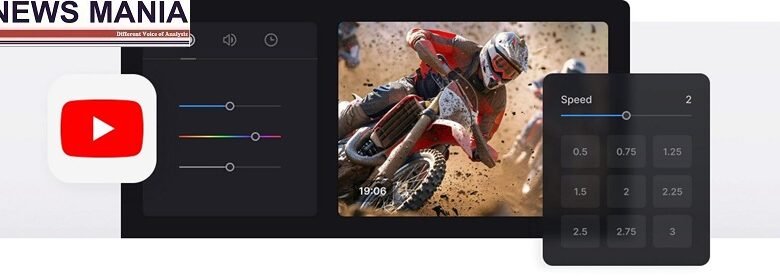
YouTube is testing two new features aimed at enhancing the viewing experience on the platform. The features are currently available to users who have subscribed to YouTube Premium. The paid service not only provides an ad-free experience but also access to experimental features. The features under testing include “Auto Speed,” which dynamically speeds up videos, and another feature called “On-the-Go,” which makes it easier to control playback.
These features were first spotted by Android Authority. The publication reports that the experimental feature called Auto Speed automatically adjusts the playback speed throughout the video. In its feature preview, YouTube claims it can save users time without sacrificing comprehension.
Users can enable the feature by navigating to the playback speed control menu, where they will see the Auto Speed option. YouTube says the feature will be hidden or disabled for unsupported videos.
Another experimental feature targeted toward audio-focused videos, like podcasts and talk shows, is On-the-Go. Controlling video playing is made simpler by the function, which eliminates interruptions from comments and other visual components.
Both manual and automatic activation of the function are possible. Users must select More > Premium controls after opening the Settings gear icon in the upper right corner of an active movie in order to manually enable it. Additionally, when the phone senses motion for at least 60 seconds while the user is watching or listening to a video with the phone unlocked, the function may automatically activate.
Both iOS and Android include the Auto Speed option. On-the-Go is only available on Android, according to YouTube’s description, however Android Authority claims to have discovered the function on iOS as well.
The publication claims that customers have until April 27 to test these capabilities, which have been accessible since last month. Google will next determine whether to retain or remove the functionalities.In the meantime, YouTube and Meta were found accountable in a lawsuit that claimed their platforms were purposefully created in ways that may cause addiction and injury to minors. A 20-year-old plaintiff known only by the initials “KGM” has been ordered to receive $6 million from the firms.