Maharashtra penalizes forced religious conversions and proposes an anti-conversion bill.
News Mania Desk/ Piyal Chatterjee/ 14th March 2026

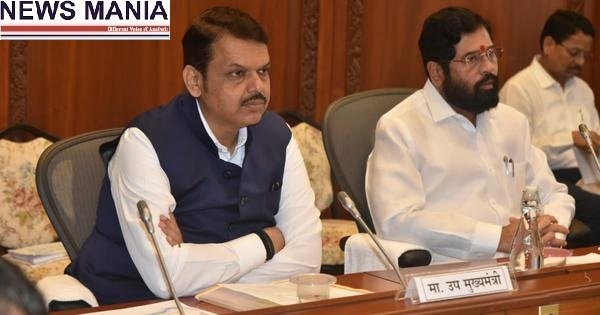
During the current budget session, the Maharashtra government introduced the Maharashtra Freedom of Religion Bill, 2025, also known as the Dharma Swatantrya Adhiniyam, in the legislative assembly. The measure seeks to control religious conversions and make those acquired by coercion, deception, or seduction illegal.
The proposed legislation requires both individuals wishing to convert to a different faith and the organizations hosting the ceremonies to give the appropriate authority 60 days’ notice. For 30 days, the notice will be on display for the public to voice any objections. If questions are raised regarding the conversion’s actual purpose, authorities may initiate a police investigation. The person has 21 days following the ceremony to submit an official declaration. The conversion will be void if there is noncompliance.
The bill suggests severe legal repercussions:
General infractions: a fine of Rs 1 lakh and a maximum sentence of seven years in prison.
Aggravated cases: Conversions involving women, children, or SC/ST people are punishable by up to seven years in prison and a fine of Rs 5 lakh.
Mass conversions: Violators risk a punishment of Rs 5 lakh and seven years in prison.
Repeat offenders face a fine of Rs 7 lakh and a prison sentence of ten years.
The individual enabling the conversion bears the burden of evidence. Parents and siblings are examples of immediate family members who may file a formal complaint (FIR) about alleged illegal conversions. Additionally, the bill offers victims protection and rehabilitation measures, such as maintenance and custody clauses. Maharashtra joins a number of states that have passed comparable legislation, including Odisha, Madhya Pradesh, Chhattisgarh, Gujarat, Himachal Pradesh, Jharkhand, Uttarakhand, Uttar Pradesh, Karnataka, Haryana, and Rajasthan. Pankaj Bhoyar, the Minister of State for Home (Rural), introduced the measure, which is anticipated to provoke more discussion in the legislature.