Queen Mercy Atang’s Bread-Made Dress at Awards Show Sparks Online Criticism
News Mania Desk/Piyal Chatterjee/12th May 2026

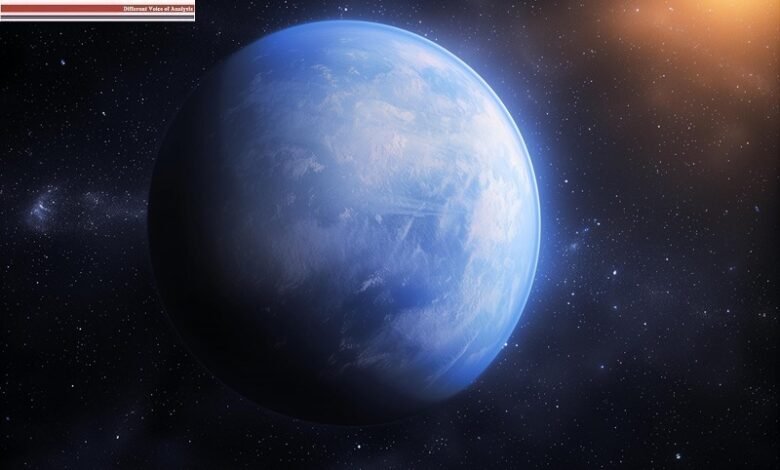
Scientists are increasingly studying a unique class of distant worlds known as sub-Neptune exoplanets to determine whether they could support conditions suitable for life. These planets, which are larger than Earth but smaller than Neptune, are among the most commonly discovered planetary bodies outside the solar system.
Recent research has suggested that despite their thick gaseous atmospheres and unusual structures, some sub-Neptune planets may possess environments capable of supporting microbial life. Unlike Earth-like rocky planets, these worlds are believed to contain deep hydrogen-rich atmospheres surrounding layers of water, ice or dense liquid oceans.
Astronomers explained that the growing interest in sub-Neptunes comes from their abundance in the Milky Way galaxy. Since they are more common than Earth-sized planets, understanding their structure and climate could significantly expand the search for habitable worlds beyond traditional Earth-like environments. The study focused on how atmospheric pressure, heat and chemical interactions behave on these planets. Researchers found that beneath the dense outer atmosphere, certain temperature and pressure conditions may allow the formation of liquid water oceans. Scientists consider liquid water one of the most important requirements for the development of life.
Experts are especially examining sub-Neptunes located within the “habitable zone” of their stars, where temperatures are neither too hot nor too cold for water to remain in liquid form. However, the thick hydrogen atmospheres of these planets create complex climate systems that are difficult to analyse.
Computer simulations used in the study indicated that some layers beneath the atmosphere could still maintain stable conditions favourable for biological activity. Researchers said these hidden ocean environments may potentially support simple life forms even if the planet’s surface itself is hostile. The research has also highlighted the importance of advanced space observatories such as the James Webb Space Telescope in studying distant exoplanets. By analysing light passing through planetary atmospheres, scientists can detect gases such as water vapour, methane and carbon compounds that may indicate habitable conditions.
Astronomers believe the findings challenge earlier assumptions that only rocky planets similar to Earth could host life. The study suggests that a much wider range of planetary environments may need to be explored in the search for extraterrestrial life. With improvements in telescope technology and exoplanet observation methods, researchers hope future missions will provide deeper insight into the atmospheric chemistry and internal composition of these mysterious worlds.