Trump’s ‘Rough Profession’ Remark on Indian Sailors Killed in Gulf Strike Sparks Debate
News Mania Desk/ Piyal Chatterjee/19th June 2026

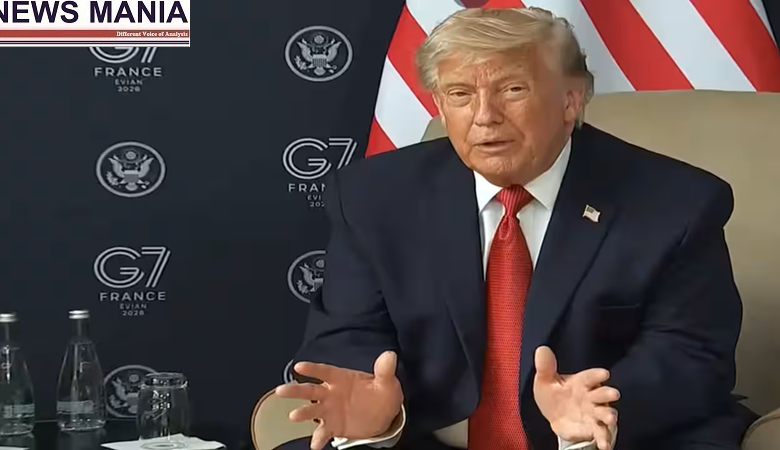
The deaths of three Indian sailors in a US military strike near the Strait of Hormuz have emerged as a sensitive issue in India-US relations, with US President Donald Trump’s comments on the tragedy drawing attention during his meeting with Prime Minister Narendra Modi on the sidelines of the G7 Summit.
The sailors were among the crew members aboard the Palau-flagged oil tanker MT Settebello, which was struck during US military operations targeting vessels allegedly linked to hostile activities in the Gulf region. The incident occurred amid heightened tensions and military confrontations in West Asia before the recent US-Iran peace agreement.
The three victims were identified as Chief Engineer Suresh Patnaala, Deck Cadet Aditya Sharma, and Engine Fitter Shivanand Chaurasiya. Their deaths prompted widespread concern in India, where thousands of citizens work aboard commercial ships operating across international trade routes. The Indian government subsequently raised the matter through diplomatic channels and sought assurances regarding the safety of Indian nationals in conflict-prone waters.
During a media interaction, Trump was asked whether he had a message for the families of the deceased sailors. Offering his condolences, the US President described maritime work as “a rough profession” and noted that such dangers have historically been associated with seafaring. While expressing sympathy, he added that the United States values the contribution of Indian sailors to global commerce and remains committed to maintaining secure shipping lanes.
Prime Minister Modi used the meeting to emphasize the importance of protecting civilian seafarers and ensuring the safety of international maritime routes, particularly in the Strait of Hormuz. The narrow waterway is one of the world’s most critical energy corridors, handling a substantial share of global oil shipments. Modi reportedly stressed that the welfare of sailors should be a key consideration in any regional security framework or peace initiative.
The incident comes at a time when India and the United States are deepening cooperation in trade, defence, and strategic affairs. However, the deaths of the Indian crew members have highlighted the risks faced by civilian maritime workers caught in geopolitical conflicts.
While both leaders reaffirmed the strength of bilateral ties and their commitment to regional stability, the tragedy has renewed calls for stronger international safeguards to protect merchant vessels and civilian sailors operating in volatile regions. The issue is expected to remain part of ongoing diplomatic discussions as countries work to prevent similar incidents in the future.