
How India’s Student Anger Is Reshaping Politics—and Why the Real Question Is Trust, Not Just Resignations
What began as a youth-led protest against recurring examination paper leaks has rapidly evolved into one of the most talked-about political developments of the year. The Cockroach Janta Party (CJP), founded by Abhijeet Dipke, has transformed from a social media-driven student movement into a nationwide campaign demanding accountability in India’s education system.At the heart of the movement lies a simple but powerful message: students deserve a fair chance. Yet, as the protests have grown, so has political interest. Nearly every major political party now sees the movement through an electoral lens, raising an important question:
Is the focus still on students—or has it shifted to politics?
Why the Movement Resonated
For millions of students, competitive examinations determine careers, livelihoods, and years of preparation. Repeated allegations of question paper leaks, cancelled examinations, recruitment delays, and uncertainty have created widespread frustration.The CJP emerged by tapping into this sentiment. Unlike traditional political organisations, it drew support largely from young people frustrated by a system they believe has repeatedly failed them.The demand soon became larger than one minister or one examination.
It became a call for transparency, accountability, and credibility.
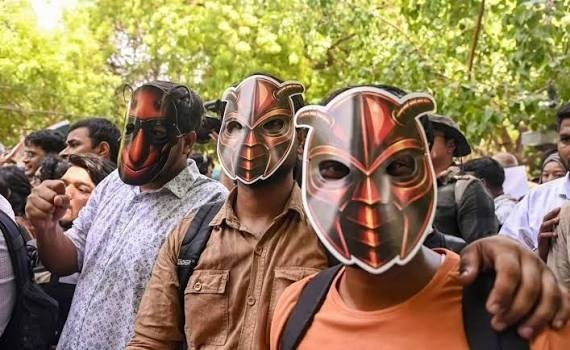
The movement reached a turning point during the Parliament March in New Delhi, where thousands of protesters attempted to march toward Parliament.
The demonstration resulted in clashes with police, the use of tear gas and baton charges, injuries to protesters and police personnel, and the registration of multiple criminal cases. The confrontation dramatically increased national attention on the movement.
Legal challenges followed, with courts being asked to examine allegations regarding police action and restrictions on protests, while public debate intensified over the balance between maintaining public order and protecting the democratic right to peaceful protest.
How Political Parties Entered the Scene
The rapid expansion of the movement ensured that political parties could not ignore it.
Opposition Strategy: Turning Student Anger into Anti-Incumbency
Opposition parties have openly supported the protests, portraying them as evidence of government failure.
Their messaging has centred on:
- Failure to prevent repeated paper leaks.
- Lack of accountability.
- Youth unemployment.
- Alleged suppression of peaceful demonstrations.
Supporting the movement allows opposition parties to connect with first-time voters and unemployed youth—an increasingly influential electoral bloc.However, critics argue that some opposition leaders appeared only after the protests gained national attention, raising questions about whether the support is driven by genuine concern or political opportunity of publicity and few Selfies and Reels.
The Government’s Response
The ruling establishment has largely rejected allegations that it ignored the issue.
Instead, it has announced measures such as:
- Fast-track courts for paper leak cases.
- Stronger anti-cheating mechanisms.
- Tougher legal action against organised examination fraud.
- Greater emphasis on technology-driven examination security.
Government leaders have also accused rival parties of attempting to hijack a genuine student movement for electoral gains.
A Difficult Position for Regional Parties : Regional political parties face a unique challenge.Supporting the protests helps them appeal to young voters.But an independent youth movement also threatens traditional political structures because it demonstrates that young voters can mobilise without relying on established parties.That possibility makes many political leaders cautious.
Is CJP Becoming a Political Force?
The future of the Cockroach Janta Party (CJP) movement remains uncertain, but one of its most significant developments has been its ability to maintain an independent identity despite drawing attention from multiple political parties. Its leadership has consistently projected CJP as a citizens’ movement rather than a conventional political organisation. However, history suggests that grassroots movements often reach a turning point where they must decide whether to remain independent, align with established political parties, transform into a political party themselves, or risk losing momentum over time. Whether CJP can sustain its independent character while continuing to expand its influence will be one of the key questions shaping its future trajectory.
Should the Education Minister Resign?
The movement’s central demand has been the resignation of Education Minister Dharmendra Pradhan, raising an important constitutional and political debate over ministerial accountability. Supporters of the demand argue that repeated controversies surrounding competitive examinations point to significant administrative failures within the education system. They contend that political accountability requires the minister to accept responsibility for these lapses, regardless of direct personal involvement. According to them, stepping down would help restore public confidence in the examination process, reinforce democratic accountability, and pave the way for reforms aimed at preventing similar controversies in the future.
Arguments Against Immediate Resignation
Not necessarily. The resignation of an Education Minister can be a significant political act, but by itself it does not automatically solve the underlying problems that lead to examination controversies.
Supporters of resignation argue that it demonstrates ministerial accountability, restores some public confidence, and signals that the government takes repeated failures seriously. It may also create pressure for institutional reforms.
However, critics argue that if the root causes—such as weaknesses in examination agencies, paper leak networks, inadequate cybersecurity, poor oversight, delays in investigations, and gaps in recruitment and governance—remain unaddressed, replacing the minister alone is unlikely to prevent future incidents.
Ultimately, meaningful reform would require:
- Strengthening the security and transparency of examination systems.
- Holding individuals directly responsible for leaks or misconduct accountable.
- Modernising technology and monitoring mechanisms.
- Conducting timely and independent investigations.
- Implementing long-term institutional reforms to restore trust.
In constitutional terms, a minister’s resignation is a question of political accountability, while solving the problem requires administrative and systemic reforms. The two are related but not the same.
How Can Normalcy Return?
Resolving the crisis will require more than political speeches or police action. A sustainable solution should include:
- Independent investigations into every major paper leak with time-bound conclusions.
- Swift prosecution of organised cheating syndicates through fast-track courts.
- Technology-driven examination security, including encrypted digital paper transmission, stronger cybersecurity, biometric verification, and AI-assisted monitoring.
- Transparent communication from authorities whenever examinations are cancelled or delayed.
- Structured dialogue between student representatives and the government instead of confrontation.
- Clear compensation or relief measures, where appropriate, for candidates affected by proven administrative failures.
- Strict accountability for officials found negligent, regardless of rank.
Beyond Politics
The CJP movement reflects something larger than a protest over examinations.It highlights a generation demanding fairness, transparency, and institutions they can trust.Political parties may attempt to shape the narrative, but the credibility of the education system should remain at the centre of the conversation.The long-term solution will not be found solely through slogans, arrests, or resignations. It will come from restoring confidence that every student competes on a level playing field, that wrongdoing is punished, and that public institutions remain worthy of the trust placed in them.
Whether the Cockroach Janta Party becomes a lasting political force or remains a symbol of youth frustration, one message is unmistakable:
India’s young citizens expect accountability—and they expect to be heard.