Italy Tightens Border Controls With Spain, Raising Fresh Questions Over Schengen
News Mania Desk/ Piyal Chatterjee/ 4th August 2026

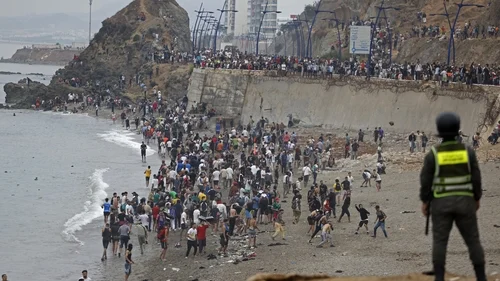
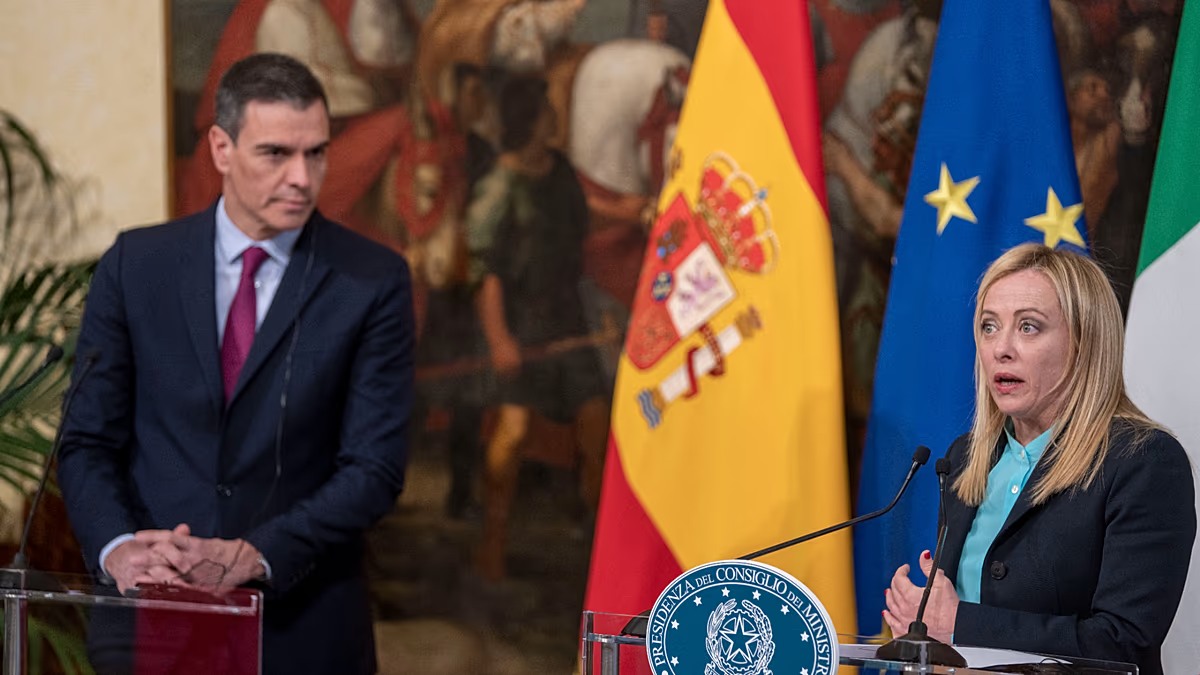
Italy’s decision to temporarily suspend free movement with Spain has triggered fresh concerns about the future of Europe’s Schengen system, after a sudden increase in migrant arrivals at Spain’s North African enclave of Ceuta put renewed pressure on the bloc’s border arrangements.
The move has drawn attention because both Italy and Spain are members of the Schengen Area, where routine checks at internal borders are generally removed to allow people to travel freely between participating countries. However, member states can temporarily reintroduce border controls under exceptional circumstances, including serious threats to public order or internal security.
Italy’s latest action comes against the backdrop of growing political pressure across Europe over migration. Governments have faced increasing demands to strengthen border management and prevent irregular migration, while human rights groups have repeatedly warned against measures that could undermine protections for migrants and asylum seekers.
The latest developments have also raised questions about whether temporary border restrictions could become increasingly common across Europe. While Schengen rules allow countries to restore checks in exceptional situations, repeated or prolonged restrictions could weaken one of the European Union’s most visible achievements: the ability of citizens to travel across much of the continent without routine passport controls.
The issue is particularly sensitive because free movement is central to the European project and supports tourism, trade, employment and cross-border travel. Any disruption can therefore have consequences extending well beyond migration policy. At the same time, European governments argue that maintaining secure external borders is essential to preserving public confidence in free movement within the bloc. The challenge is to balance national security and migration control with the principles underpinning Schengen.
Italy’s decision has therefore renewed a broader debate over the future of Europe’s border-free travel area. Whether the measures remain temporary or become part of a wider trend will depend on how governments respond to migration pressures and whether EU members can strengthen external border management without permanently undermining internal free movement.k an unexpected turn when a section of DMK supporters began chanting the name of Tamil actress Trisha.
The slogan appeared to suggest that Vijay’s attention was focused elsewhere rather than on the Cauvery water issue. Responding to the crowd, Stalin made a comment that was interpreted by some as having a double meaning. He subsequently clarified that he was referring specifically to the Cauvery dispute.
The remark triggered a political controversy, eventually leading to police action against the DMK leader. Stalin was detained and questioned as part of the inquiry into the speech. The matter reached the Madras High Court when Stalin’s anticipatory bail plea came up for hearing. During the proceedings, Tamil Nadu Advocate General Vijay Narayan informed the court that the former deputy chief minister would be released on station bail after questioning and would not remain in police custody.
Justice G K Ilanthiraiyan took note of the government’s assurance and directed the police to ensure that Stalin’s detention was not prolonged. The court ordered that he be released before the end of the day after completion of the questioning process. The episode has added another layer to the political tensions surrounding the Cauvery water dispute in Tamil Nadu. The issue remains politically sensitive, with parties in the state frequently accusing one another of failing to protect the interests of farmers and secure the state’s share of Cauvery water.