The Supreme Court Forms a Panel to Examine Police Behaviour and Violence During NEET Protests
News Mania Desks/ Piyal Chatterjee/ 21st August 2026

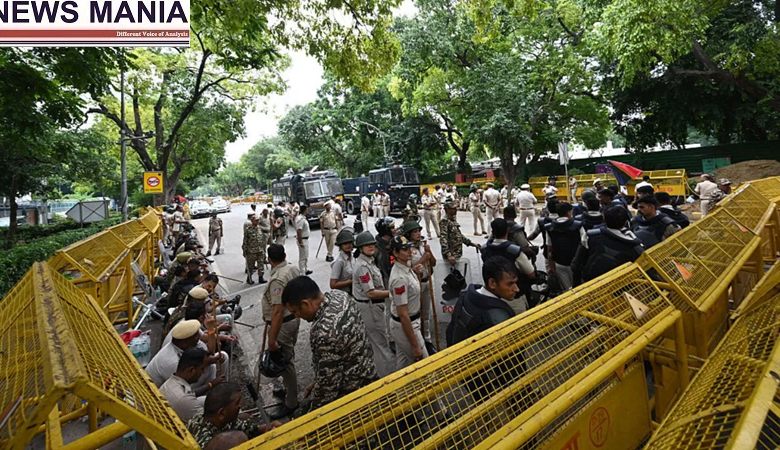
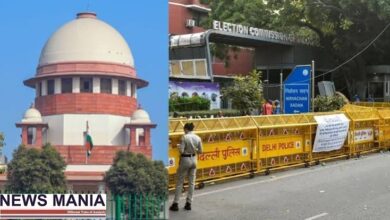
A five-person High-Powered Expert Committee (HPEC) was established by the Supreme Court on Thursday to investigate claims that police, paramilitary groups, and other security personnel used excessive and disproportionate force against peaceful protestors gathered at Jantar Mantar in Delhi and other states in opposition to the NEET paper leak. Justice R Subhash Reddy, a former top court judge, is in charge of the committee.
The committee will also include former Chief Justice Ravi Shankar Jha of the Punjab and Haryana High Court, former Delhi High Court Judge Justice Shalinder Kaur, former CBI Director Rishi Kumar Shukla, and retired Meghalaya DGP L R Bishnoi, according to a bench of Chief Justice Surya Kant, Justices Joymalya Bagchi, and V Mohana.
“This HPEC (High-Powered Enquiry Committee) has been constituted bearing in mind a wide variety of considerations, including the individual expertise and experience of each of its members, as well as the diversity of the Committee, among other factors.
“We are confident that the recommendations of the HPEC will be of invaluable assistance to this Court, and the Committee will be able to undertake a comprehensive assessment of all such issues as merit due contemplation,” the bench said. The highest court made it clear that the committee’s investigation would not be a one-time activity out of extreme prudence.
It requested that the Committee conduct an ongoing, recurring evaluation of the problems and present its preliminary results on a regular basis. Allegations of harassment and molestation, especially those involving female protestors, must be given great priority, according to the top court. The significant and severe injuries demonstrators suffered during police action will also be investigated.
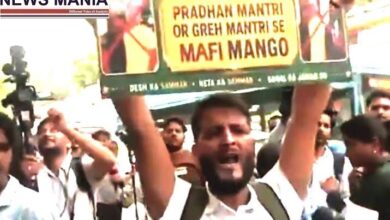
On July 20, the opening day of the Monsoon Session, thousands of demonstrators led by the Cockroach Janta Party called for a march on Parliament to demand Education Minister Dharmendra Pradhan’s resignation due to the NEET paper leak.
To guarantee that important evidence is not altered throughout the investigation and that the chronology of events can be objectively reviewed, the court has mandated the retention of CCTV footage, drone recordings, body-cam footage, and PCR call records pertaining to the protest.
The top court reiterated its previous ruling and mandated the release of juveniles in custody, with the exception of those accused of grave and heinous offences. Additionally, it stressed the safeguarding of the protesters’ private information. prohibiting the police from disclosing their personal information and mandating that it be protected.
The court also made it clear that competent authorities might take independent action against police officers; departmental action against them would not be dependent on the committee’s findings. According to the court, the committee will look into claims that police and other security forces used excessive force against demonstrators.
Allegations including the deployment of tear gas, electric batons, pellet guns and lathi-charges fall under this category. The group will look at how to properly balance protecting citizens’ constitutional right to peaceful protest with keeping law and order during demonstrations and peaceful gatherings.